




The Expert Guide:
How to Choose the Right Balance Bike for Your Child
Isabella | 19th, Jan
Thinking about getting a balance bike for your toddler? You’re in exactly the right place.
A balance bike might look simple—no chains, no gears—but don’t let that fool you. It’s one of the most powerful tools you can give a young child for building coordination, balance, confidence, and independence. For many kids, it’s their very first taste of freedom on wheels. And for parents, it’s often the first real decision in a long line of “what actually matters?” purchases.
Whether you’re shopping for your child’s first bike or thinking about upgrading to something that fits them better, this balance bike guide walks you through everything—without pressure, without hype, and without overcomplicating things.
Let’s take it step by step.
A Simple Balance Bike Guide for Parents Who Don’t Want the Guesswork

If this is your first time buying a balance bike, it can feel oddly overwhelming. Sizes, materials, tires, brakes, weight limits—suddenly you’re comparing specs like you’re buying a mountain bike for yourself.
Here’s the thing: most parents don’t need the “perfect” bike. They need the right bike for their child.
So instead of chasing features, start with the fundamentals.
The Core Factors That Actually Matter
Age and Fit
Different ages usually mean different heights, weights, and motor skills. A bike that’s too big slows learning down. A bike that’s too small gets outgrown before confidence really kicks in. When your child sits on the seat, both feet should rest flat on the ground—no tiptoes, no stretching.
Weight
Lighter bikes are easier to control, especially for toddlers who are still figuring out how their bodies move through space. If a bike feels heavy to them, it’s harder to steer, harder to stop, and honestly… less fun.
Tires
Foam tires are low-maintenance and lightweight. Air-filled tires offer better cushioning and a smoother ride. Tire size also matters—shorter riders usually do better with smaller wheels.
Adjustability
Kids grow fast. A seat and handlebar that adjust up and down can extend the life of the bike by a year or more.
Safety Features
Rounded bolts, non-slip grips, and a low step-through frame all make a difference. Extras like brakes or training wheels depend on the child, not a rulebook.
That’s the foundation. Everything else is optional.
What Age Is Right for a Balance Bike? (And Why Age Isn’t the Real Question)

People often ask for an exact number. Eighteen months? Two years? Three?
Here’s the honest answer: readiness matters more than age.
Most children are ready for a balance bike between 18 months and 2 years, once they’re confidently walking. Some kids who are tall and steady can start as early as 12 months, while others may not be interested until closer to 3. Many will happily ride until 4 or even 5.
The real test is simple:
- Can your child walk steadily on their own?
- Can they sit on the bike with both feet flat on the ground?
If yes, they’re probably ready.
Starting early helps children develop balance, coordination, and confidence naturally. It also makes the transition to a pedal bike smoother later on, because balancing already feels familiar rather than scary. The long-term benefits show up quickly and stick around, especially when kids move from coasting to pedaling with almost no drama.
Choosing the Right Size: Why Inches Matter More Than Birthdays
Balance bikes are usually sized by wheel diameter—10-inch, 12-inch, 14-inch—and sometimes by recommended age. Ignore the age labels. Focus on fit.
For Younger Toddlers (Around 1–2 Years Old)
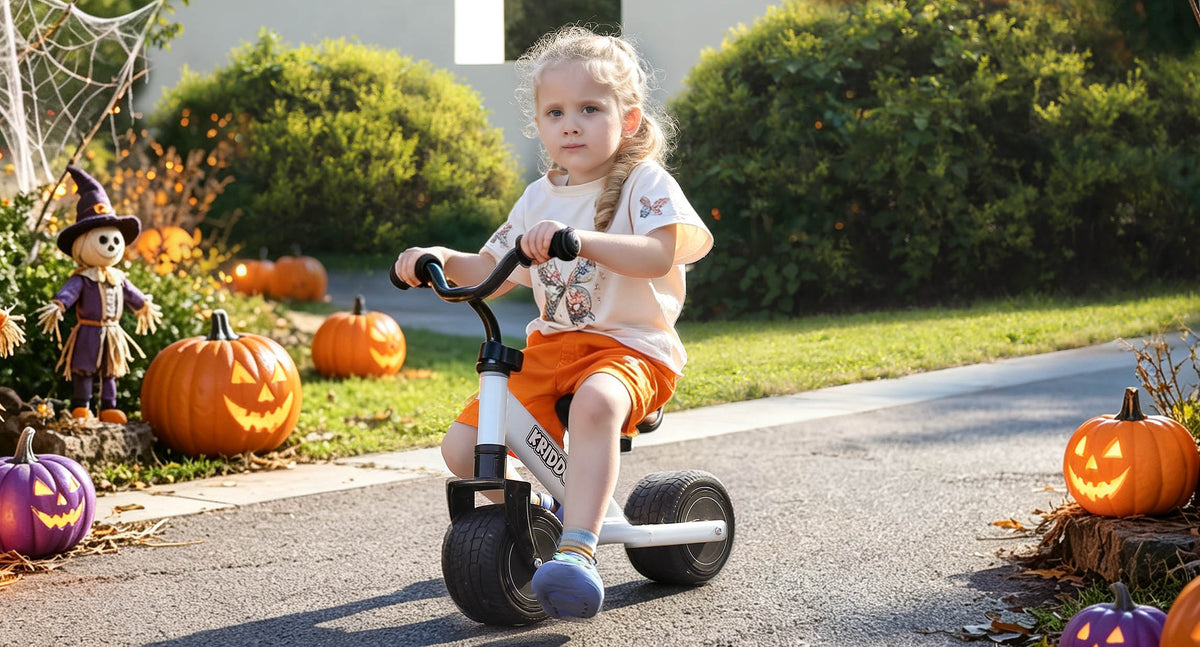
Children around 1.5 years old often do best on a baby balance bike designed specifically for smaller riders. A good example is the KRIDDO mini balance bike, These bikes typically have:
- Wider tires for extra stability
- A lower seat height
- A compact frame that doesn’t overwhelm small bodies
Some parents also prefer 10-inch wheels for this age range because they keep the bike closer to the ground and easier to control.
For Kids Around 2–5 Years Old
Once kids hit the 2–5 range, 12-inch or 14-inch balance bikes usually work well. Most children fall into one of these two sizes, depending on height and inseam.
Instead of guessing, it helps to look at a detailed sizing breakdown.
A well-fitted bike gives kids confidence. A poorly fitted one teaches hesitation.
How Much Does a Balance Bike Really Need to Cost?

Balance bikes come in a wide price range, and yes—price does affect materials and features. But higher cost doesn’t automatically mean better for your child.
Typical Price Tiers
Budget (Under $70)
These bikes usually have simpler designs and heavier materials like basic steel or plastic. They’re widely available and perfectly fine for casual neighborhood riding.
Mid-Range ($70–$150)
This is where many well-known brands sit. You’ll often see better frames, adjustable seats and handlebars, and improved build quality.
Premium ($180 and Up)
Lightweight aluminum or carbon frames, refined braking systems, and specialty designs. These are often chosen by families focused on performance or long-term training.
Here’s the honest truth: most kids aren’t racing downhill trails. They’re riding on sidewalks, driveways, and park paths. They don’t need carbon fiber to learn balance.
That’s why many parents gravitate toward bikes that balance affordability and safety.
Most KRIDDO kids bikes cost under $70, but each one goes through certified third-party testing and meets safety regulations in the UK, EU, US, and Canada. It’s proof that lower cost doesn’t have to mean lower standards.
Foam Tires vs Air Tires: Which One Fits Your Life?

Tires don’t get enough attention, yet they shape the riding experience more than most people expect.
Foam Tires
- Lighter, which helps beginners steer more easily
- Zero maintenance—no pumping, no flats
- More resistant to punctures
The trade-off? They wear down faster and can’t be repaired. They also tend to make a bit more noise on pavement.
Air-Filled Tires
- Better shock absorption
- Smoother ride on uneven surfaces
- Longer lifespan
They do require occasional maintenance and typically raise the price of the bike.
If you want something simple and low-stress, foam tires are practical. If your child rides on varied terrain and you don’t mind a little upkeep, air tires feel more refined.
There’s no wrong answer—just different priorities.
How Heavy Is Too Heavy for a Balance Bike?
Weight matters more than many parents realize.
A good general range for balance bikes is 4 to 8 pounds. Lighter bikes are easier to control, especially for smaller riders. Heavier bikes may feel stable but can slow learning.
A useful rule of thumb:
If a bike weighs more than 30% of your child’s body weight, it becomes harder for them to manage. That extra effort can reduce confidence and make riding feel like work instead of play.
Materials affect weight:
- Aluminum and carbon fiber are lighter
- Foam tires reduce overall mass
- Brakes and rubber tires add weight
- Carbon steel is sturdy but heavier
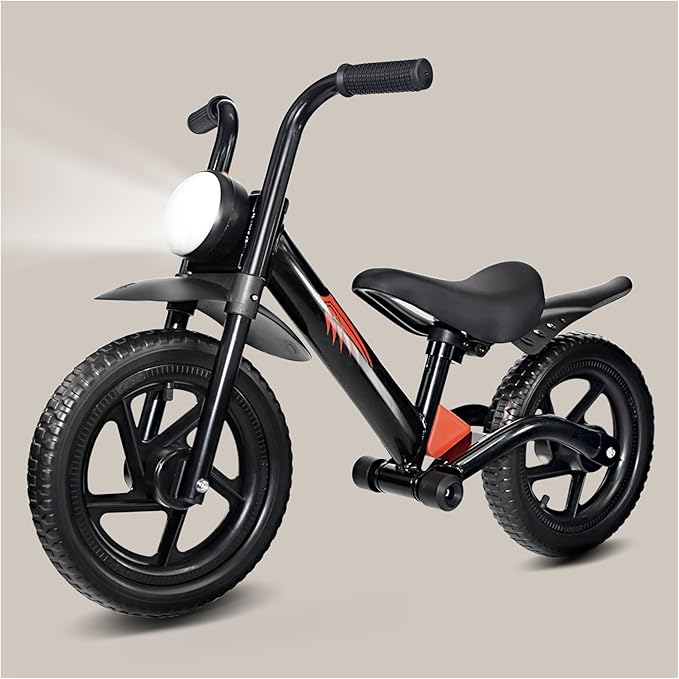
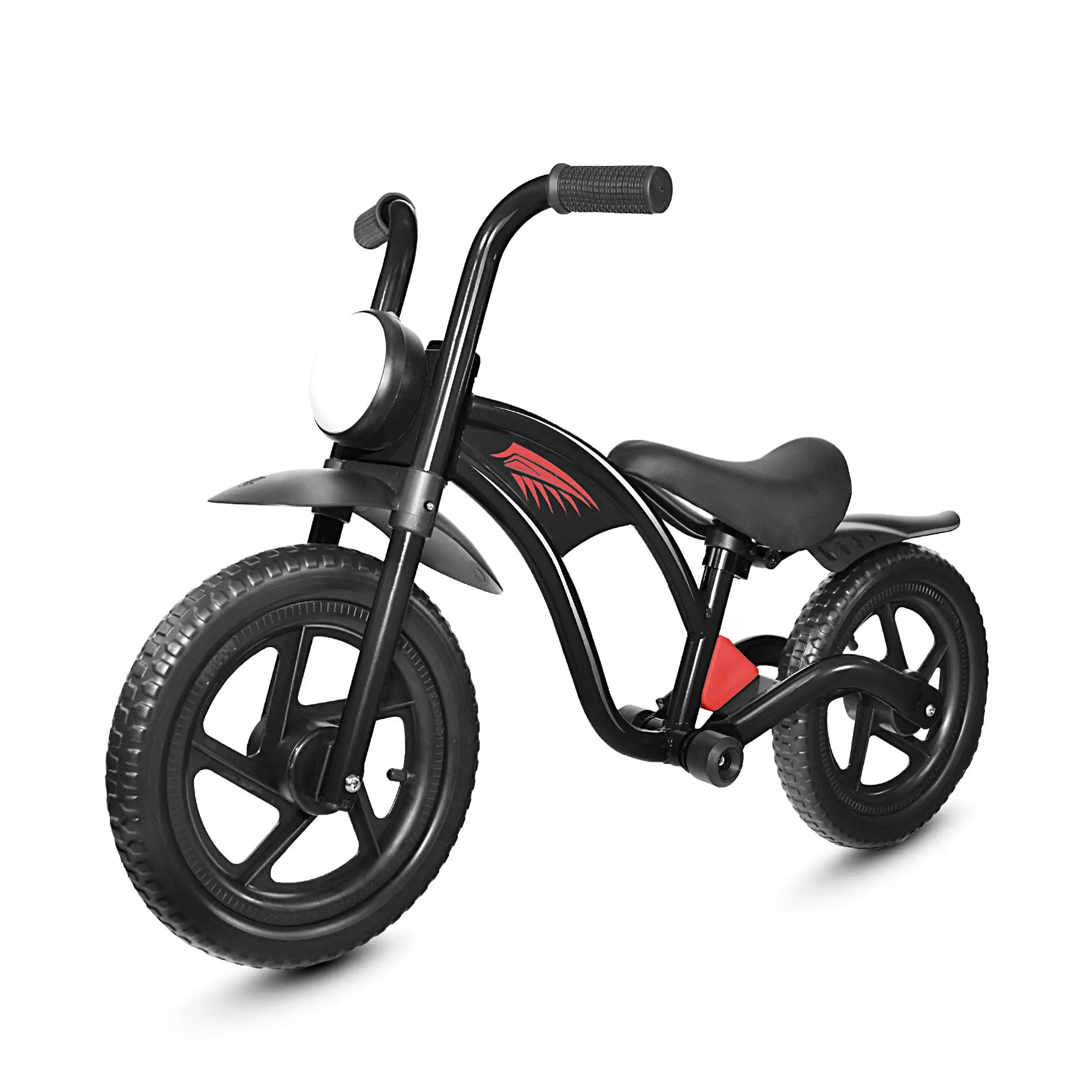
One of the lightest options available is KRIDDO’s light weight balance bike. At just 5.7 lbs and $55.25, it hits a sweet spot between control and affordability.
Featured Product
Balance Bike Frame Materials: What You’re Really Choosing
Material isn’t just about weight—it’s about durability, maintenance, and how the bike ages.
Aluminum
Light, rust-resistant, and common in mid- to high-range bikes. Quality varies by manufacturer.
Wood
Stylish and eco-friendly, often budget-friendly too. Limited adjustability and not ideal for wet outdoor storage.
Plastic / Composite
Lightweight and sometimes surprisingly strong. High-reinforcement plastics can be very durable but cost more.
Carbon Fiber
Extremely light and strong. Usually reserved for premium models.
Carbon Steel
Heavy but tough. Common in affordable bikes. Can rust if neglected, but offers excellent durability.
If you’re balancing price, safety, and longevity, carbon steel is often a practical choice. It’s not glamorous, but it’s reliable.
Do Balance Bikes Need Brakes?
This one sparks debate.
Younger children naturally use their feet to slow down. For them, a hand brake isn’t essential. As kids get faster and more confident, learning to use a brake can help them stop more efficiently—and save their shoes.
For older kids or those riding downhill or at higher speeds, brakes become more useful. At some point, if a child truly needs a brake to control speed, they may already be ready for a pedal bike.
So yes, brakes can help—but they’re not mandatory for every child.
Training Wheels or No Training Wheels?
Balance bikes became popular partly because they removed training wheels from the equation. That said, training wheels have helped kids learn to ride for decades, and they still work.
Training wheels allow children to ride longer distances with older siblings. They can be set slightly off the ground so kids practice balancing without fully relying on them. Many children transition away from them in a single afternoon once they’re ready.
Both approaches are valid. There’s no universal winner.
Bikes with and without training wheels—are simply different tools for the same goal: helping kids ride confidently.
Featured Product
What About Footrests?

Footrests are optional. Always have been.
Some kids love them. They coast, glide, and feel like they’re flying. Others never use them.
The key is placement. A poorly positioned footrest can interfere with walking and pushing. A well-designed one disappears when not in use.
If your child doesn’t notice it while walking the bike, it’s probably fine. Whether it gets used is another story entirely.
Featured Product
Final Thoughts: Choosing What Actually Fits Your Child
This balance bike guide isn’t about telling you what to buy. It’s about helping you see what matters—and what doesn’t.
- Your child doesn’t need the most expensive bike.
- They don’t need the lightest bike on the market.
- They don’t need every feature.
They need the best balance bike—one that fits, feels manageable, and encourages them to keep riding.
Everything else is secondary.