




Wagon vs Stroller:
How to Choose the Right Ride for Your Family
Jacob | 14th, Oct
When you have young children, getting everyone out the door can feel like a small expedition. Between snacks, spare clothes, toys, and the occasional favorite stuffed animal, even a short family outing can require plenty of preparation. Choosing between a stroller wagon and a traditional stroller adds another decision to the mix.
In the wagon vs stroller debate, neither option is automatically better. A traditional stroller usually works well for everyday errands, neighborhood walks, and crowded places. A stroller wagon, on the other hand, offers extra room for children and gear, making it appealing for outdoor adventures, family gatherings, and longer days away from home.
The right choice depends on your children's ages, your daily routine, and the places you visit most often. Let's compare the two options and look at what matters before bringing one home.
Wagon vs Stroller: What's the Difference?

Although both options help parents transport young children, their designs serve different purposes.
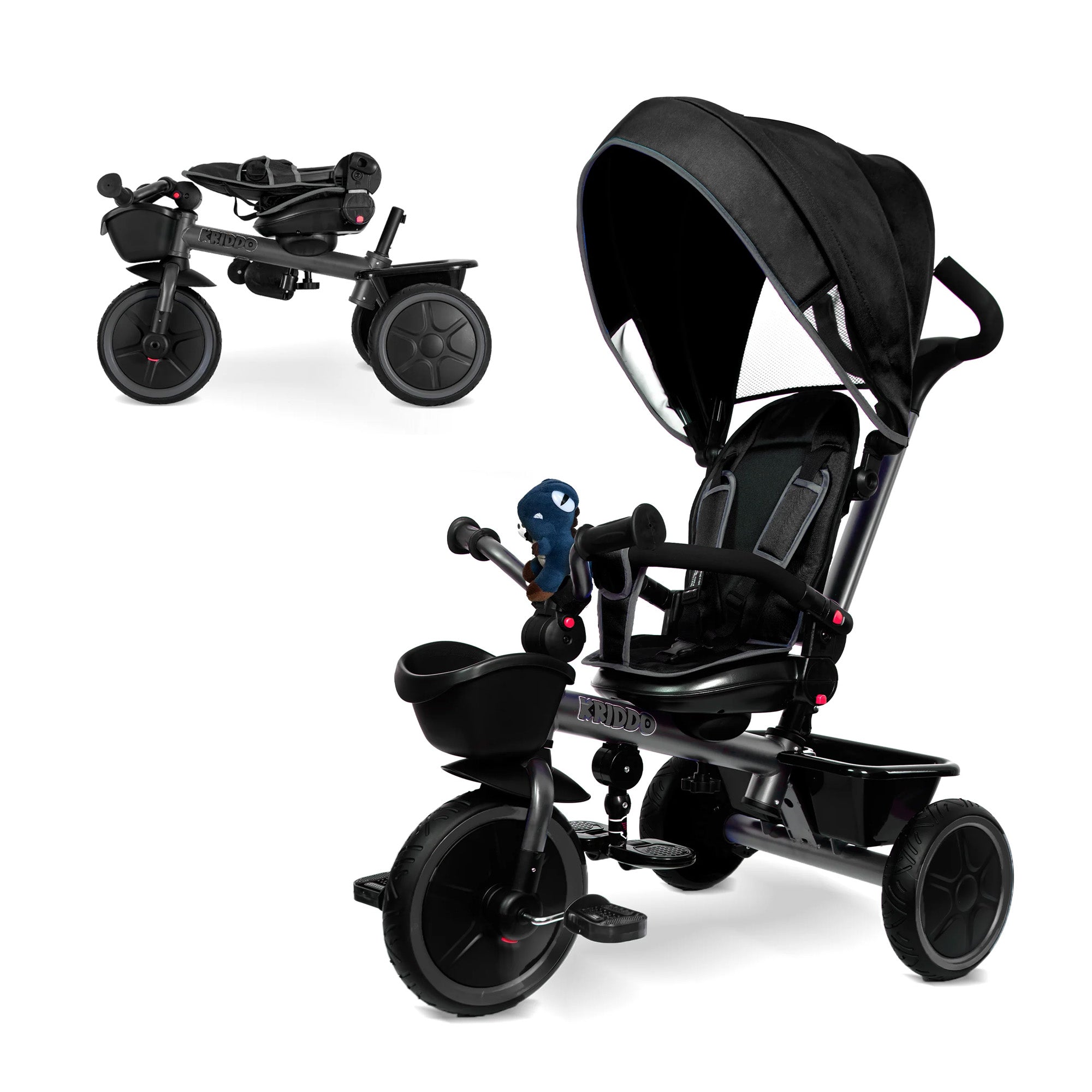
A traditional baby stroller typically features a seat that faces forward or can be reversed toward the parent. Many models offer reclining positions, a five-point harness, a storage basket, and a canopy for shade. Their relatively compact frames and responsive steering make them practical for sidewalks, shops, appointments, and other everyday destinations.
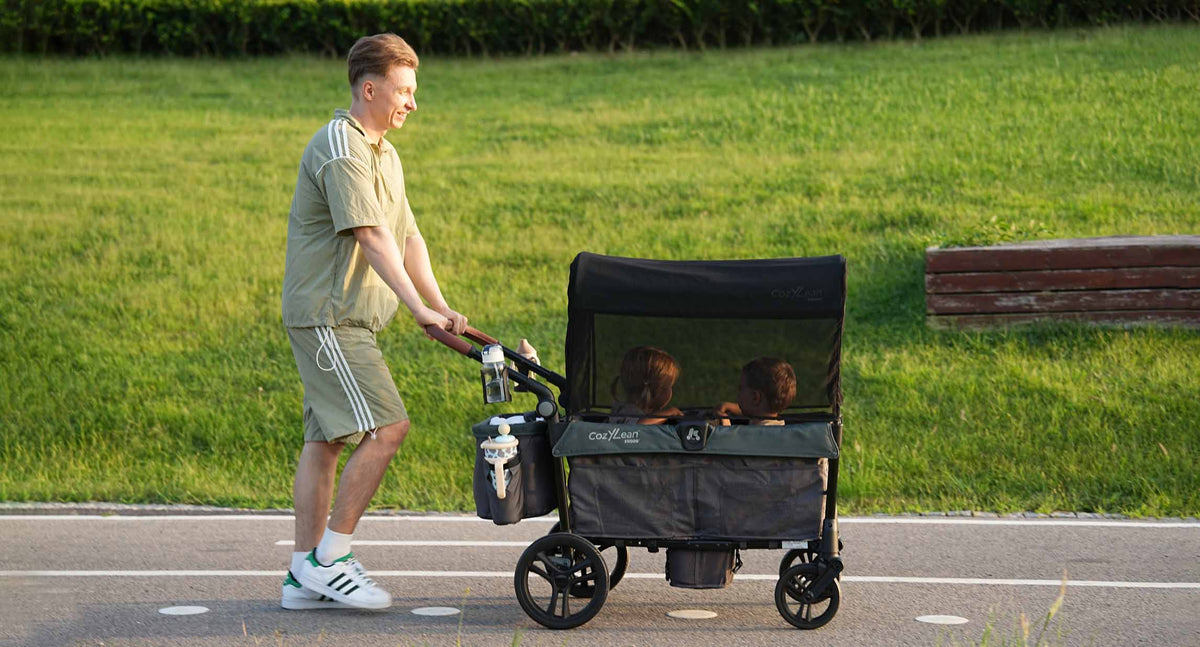
A stroller wagon generally has a wider, cart-like body with room for children to sit side by side or face one another, depending on the model. Some feature individual seats and harnesses, while others provide bench-style seating. Many can be pushed or pulled, and their larger wheels and roomy interiors make them useful for carrying children alongside snacks, bags, and outdoor supplies.
The main difference comes down to convenience versus capacity. In a wagon vs stroller comparison, the stroller is often easier to maneuver through busy spaces, while the wagon gives families more room to spread out.
Pros and Cons of a Stroller Wagon
A stroller wagon can be a practical choice when family outings involve more than a quick trip around the block. Think about a day at the beach, a weekend sports game, or a park visit when everyone seems to need something different.
Why Parents Choose a Stroller Wagon
More room for growing children
Wagons often provide generous seating space for toddlers and older children. Depending on the model's capacity and seating configuration, siblings may be able to ride together instead of requiring separate rides.
Extra space for family essentials
Towels, water bottles, snacks, spare clothes, and outdoor toys can quickly fill a standard stroller basket. A wagon's larger interior can make it easier to bring everything along without balancing bags on the handle.
Useful for outdoor activities
Many stroller wagons feature larger wheels that handle suitable outdoor surfaces more comfortably than small stroller wheels. They can be convenient for park outings, sporting events, and some beach or campground trips, provided the terrain is appropriate for the specific model.
What to Consider Before Buying
A larger footprint
The same spacious design that makes a wagon appealing can also make it difficult to navigate narrow store aisles, crowded sidewalks, and tight indoor spaces. Wagons may also take up more room in a vehicle and require more storage space at home.
Age and seating requirements
Not every wagon is suitable for babies who cannot sit independently. Some models accommodate younger infants only when used with specifically approved accessories. Always check the manufacturer's age, weight, seating, and restraint requirements before use.
A wagon is often most useful once children can sit safely in the configuration provided by the manufacturer.
Pros and Cons of a Traditional Stroller
For many families, a traditional stroller remains the most convenient option for everyday life. It can make school drop-offs, grocery shopping, medical appointments, and neighborhood walks easier to manage.
Why a Traditional Stroller Works Well
Easy handling in busy places
A stroller's narrower frame and responsive steering generally make it easier to turn corners, move through store aisles, and navigate crowded public spaces. A compact model can also be helpful when getting on public transportation or moving through an airport.
Comfort for younger babies
Many strollers offer reclining seats, adjustable canopies, and supportive seating arrangements. Depending on the model, a stroller may also accommodate an infant car seat or bassinet approved by the manufacturer.
If you're preparing for a newborn, your choice should reflect your baby's developmental stage rather than appearance alone. Babies need an appropriate, manufacturer-approved seating arrangement, and the question of when a baby can sit in a stroller depends on the seat design, the baby's development, and the manufacturer's instructions.
Convenient for everyday errands
A stroller is often easier to fold, lift, and store than a larger wagon, although size and weight vary considerably between models. Many also include storage baskets and accessories that keep everyday essentials within reach.
Potential Drawbacks of a Traditional Stroller
Less room for multiple children and bulky gear
A single stroller may not meet the needs of a family with several young children. Even a stroller with a generous basket can feel crowded when you're carrying picnic supplies, jackets, and toys.
Some toddlers want more freedom
As children grow, they may become less interested in sitting still for an entire outing. A stroller can still be useful for longer walks, tired legs, and busy environments, but some families may prefer a roomier alternative for particular activities.
Wagon vs Stroller: 7 Factors to Consider Before Buying
Instead of choosing based on popularity, think about how each option would fit into your actual routine. These seven considerations can help narrow your choices.
1. Set a Realistic Budget
Prices vary widely depending on construction, materials, features, and brand. Strollers and stroller wagons can range from around $50 to $1,000, with many options falling between $200 and $500.
Before comparing prices, decide which features matter most. A lightweight stroller may be sufficient for neighborhood walks and errands, while a family that regularly attends outdoor events may value a wagon's additional seating and storage.
The overall cost of a stroller and its available features can help you establish a realistic spending range. It's also worth considering how different stroller designs and configurations suit your family's needs before paying for features you may rarely use.
2. Consider Your Children's Ages
Your children's ages and developmental abilities should play a major role in the wagon vs stroller decision.
Families with newborns should prioritize a stroller that supports an approved infant seating arrangement. Families with toddlers or several older children may find a wagon more useful, especially when everyone needs a place to rest during longer outings.
If you have children at different stages, check whether one product can safely accommodate each child. Never assume that a product suitable for an older toddler is automatically appropriate for an infant.
3. Think About Your Typical Activities
Picture a normal week rather than an occasional special outing.
Do you walk to nearby shops, attend appointments, and take daily neighborhood strolls? A traditional stroller may be the more convenient option. Do you spend weekends at sports fields, parks, outdoor gatherings, or campsites with plenty of equipment? A wagon may provide the capacity you need.
Families who enjoy both kinds of activities may find that the two products serve different purposes. The best choice is the one that makes your most frequent outings easier.
4. Measure Your Vehicle and Storage Space
A product can look perfect in a store but become frustrating if it barely fits in your trunk.
Before purchasing, measure your vehicle's cargo area and compare it with the product's folded dimensions. Consider whether you'll need room for groceries, luggage, or other children's equipment at the same time.
Pay attention to the product's weight, too. If you frequently lift it into a vehicle or carry it up stairs, a lighter frame may be more practical than a larger design with additional features.
5. Check Storage and Everyday Features
Small details can make a meaningful difference when you're out with children.
Look for useful features such as a storage basket, cup holders, snack trays, adjustable canopies, and footrests. For a stroller wagon, consider whether the seating arrangement, harnesses, wheel design, and handle placement suit your intended activities.
Car seat compatibility is particularly important for families with infants. Confirm that the exact product and accessory combination is approved by the manufacturer instead of assuming that a seat will fit because it appears compatible.
6. Plan for Travel and Vacations
Travel can change which option makes the most sense.
A lightweight, compact stroller may be easier to manage in airports, busy attractions, and crowded streets. A larger wagon may be more convenient for road trips, outdoor events, and destinations where carrying extra supplies is part of the plan.
Think about how you will transport the product, where you will use it, and whether your destination permits wagons. Airline policies, attraction rules, and local restrictions can differ, so check them before traveling.
7. Compare the Trade-Offs and Read Reviews
A final comparison can help clarify your priorities.
A traditional stroller generally offers easier maneuverability, a more compact design, and a wider range of infant-compatible configurations. A stroller wagon typically provides more shared seating space, additional cargo capacity, and flexibility for outings with multiple children.
Neither option guarantees a better experience in every situation. Read reviews from parents whose family size, children's ages, and routines resemble yours. Pay attention to comments about folding, steering, durability, cleaning, and storage, while checking product specifications and safety information independently.
So, Which Is Better: Wagon vs Stroller?

The answer depends on how your family spends its time.
Choose a traditional stroller if you prioritize daily convenience, easy steering, compact storage, and suitable seating for a younger baby. Choose a stroller wagon if you need room for multiple children and extra gear during outdoor activities, and you have enough space to transport and store it.
If your budget and storage space allow, owning both can be useful because they serve different purposes. Otherwise, start with the product that best matches your children's current needs and the outings you take most often.
The goal isn't to buy the biggest or most feature-packed option. It's to find a safe, comfortable way to get outside with your children and make family outings easier to enjoy.