




When Can a Baby Sit in a Stroller?
A Parent’s Guide
Ella | 18th, Aug
Bringing a newborn home can make the outside world feel surprisingly far away. For those first weeks, you’re often focused on feeding, naps, diaper changes, and figuring out why your baby is perfectly happy until the exact moment you sit down.
Eventually, though, you start wanting to get outside.
A walk around the neighborhood can be a nice change of scenery for both of you. But as your baby grows, you may start wondering when they can move from a more reclined stroller setup into an upright seat.
So, when can a baby sit in a stroller?
There isn’t one exact age that works for every child. What matters most is whether your baby has developed enough head, neck, and core control to sit safely in an upright position. For many babies, this happens around 6 to 9 months.
Still, your baby’s developmental signs matter more than the number on the calendar.
When Can a Baby Sit in a Stroller Facing Forward?

Most babies are ready for a forward-facing stroller seat once they can control their head, neck, and core independently. This is commonly around 6 to 9 months, although some babies reach this stage earlier or later.
Before making the switch, look for a few practical signs:
- They can sit upright without support.
- They have strong and steady head and neck control.
- They can spend extended periods out of their infant car seat comfortably.
- They can maintain a stable seated position without constantly tipping forward or sideways.
If your baby still struggles to hold their head up or sit without support, they may need a stroller bassinet or another setup specifically designed for younger infants. The important thing is to follow the stroller manufacturer's age, weight, and positioning instructions rather than rushing the transition.
Head support is especially important. If a baby's head and neck aren't adequately supported, a sudden stop or a bump in the sidewalk can cause their head and body to jolt forward.
For younger babies who aren't ready to sit independently, a flat bassinet or an approved infant-support setup that provides appropriate neck and back support may be more suitable.
Why Use a Stroller Once Your Baby Is Ready?
Once your baby can sit safely in the stroller, getting out of the house becomes much easier.
A stroller gives parents a practical way to bring their child along for walks, errands, trips to the park, and family outings. At the same time, babies get a comfortable place to sit while taking in everything happening around them.
Some everyday benefits include:
- Convenience: You can take your baby along without carrying them the entire time.
- Comfort: A properly fitted stroller seat gives your child a comfortable place to ride.
- Mobility: Strollers make everyday walks, shopping trips, and outdoor activities easier to manage.
- Safety: A properly secured child can stay safely contained while you're moving around.
And for parents, there’s another benefit that doesn't always make the product description: sometimes a walk is exactly what everyone needs after a long morning at home.
Tummy Time Can Help Build Those Muscles
Your baby may not be lifting weights anytime soon, but they can still work on building the muscles needed for sitting.
Supervised tummy time gives babies an opportunity to lift and turn their heads while strengthening the neck, back, and abdominal muscles.
Place your baby on their tummy while they’re awake and supervised. Put a mirror, toy, or your face in front of them to encourage them to look up.
Of course, some babies are not impressed.
You may get a few seconds of head lifting followed by a very dramatic complaint. That’s normal. Try shorter sessions and make them more interesting with toys, mirrors, or your voice.
The goal isn’t to force your baby to stay on their tummy for a long time. It’s simply to give them regular opportunities to practice moving their body.
That head control is one of the early steps toward sitting independently.
How to Choose a Stroller for Your Baby

Once your baby is ready for a more upright stroller, you still have another decision to make: which stroller actually fits your life?
A stroller can look perfect in a store and feel completely different after you’ve pushed it around the neighborhood with a diaper bag hanging from the handle and a baby who has suddenly decided they don’t want to be in it.
A few features deserve extra attention.
Portability
If you regularly travel, use public transportation, or move the stroller in and out of your car, portability matters.
A lightweight stroller that folds easily can be much more convenient than a bulky model that requires a lot of effort to carry.
Think about your storage space at home, too. If the stroller needs to live in a small entryway or apartment, its folded size can become just as important as its open size.
Maneuverability
A stroller should be easy to steer and control.
Swivel wheels can make turning easier, which is especially useful in shopping centers, busy sidewalks, and other crowded areas.
Try pushing the stroller with one hand if you can. Make a few turns. See how easily it changes direction.
It may not seem important during a two-minute test, but you’ll appreciate easy maneuverability after pushing your baby around for an hour.
Wheel Type
The type of wheels also affects how the stroller performs on different surfaces.
Air-filled tires can provide a smoother ride on rougher terrain, while foam-filled tires require less maintenance and are less vulnerable to punctures. Plastic wheels may work well for city sidewalks and other smooth surfaces, but they may not handle rough ground as comfortably.
The differences between foam and air tires are worth keeping in mind when you’re thinking about how different tire materials respond to various surfaces. The same basic consideration applies when choosing wheels for products your child will use as they grow.
Braking System
A reliable brake is another feature you don’t want to overlook.
The stroller should have an effective parking brake that keeps it from rolling when you stop. Some higher-end models also include hand brakes for additional control on downhill surfaces.
Try the brake yourself before buying. It should be easy to engage and release without awkward movements.
Cove Baby Stroller: Lightweight for Everyday Adventures
If you're looking for a stroller for a baby who has reached the appropriate developmental stage, the PAPAYA Baby Stroller is designed for children from 6 months up to 40 pounds.
Its features focus on the practical details parents deal with every day:
- Lightweight and portable: At just 11.88 pounds, it can be carried with one hand. When folded, it's smaller than a 20-inch suitcase, making it convenient for cars, closets, and family trips.
- Adjustable comfort: The spacious seat includes a 110°–170° adjustable backrest and a two-position footrest, allowing children to sit, recline, or stretch out comfortably.
- Sun protection: A large UPF 50+ canopy helps protect your child from the sun during walks and outdoor adventures.
- Grows with your child: The removable safety system can switch between a five-point and three-point harness, while the front bar can also be removed as your child becomes more independent.
- Smooth handling: Swivel front wheels, built-in suspension, and 360° rotation make it easier to navigate sidewalks, shops, and tighter spaces.
- Reliable braking: Rear-wheel brakes provide quick and dependable stopping when you need to park the stroller.
- Storage for parents: A spacious under-seat basket and included mom bag provide room for diapers, wipes, snacks, drinks, toys, and other everyday essentials.
- Lightweight construction: Its aluminum frame keeps the stroller light while providing a sturdy structure, with a feature set priced under $200.
What About a Stroller Tricycle?
Eventually, your baby becomes a toddler, and their relationship with the stroller starts to change.
Instead of happily sitting there and watching the world go by, they may want to touch everything, steer something, or figure out how their feet work.
That’s where a stroller trike can become an interesting option.
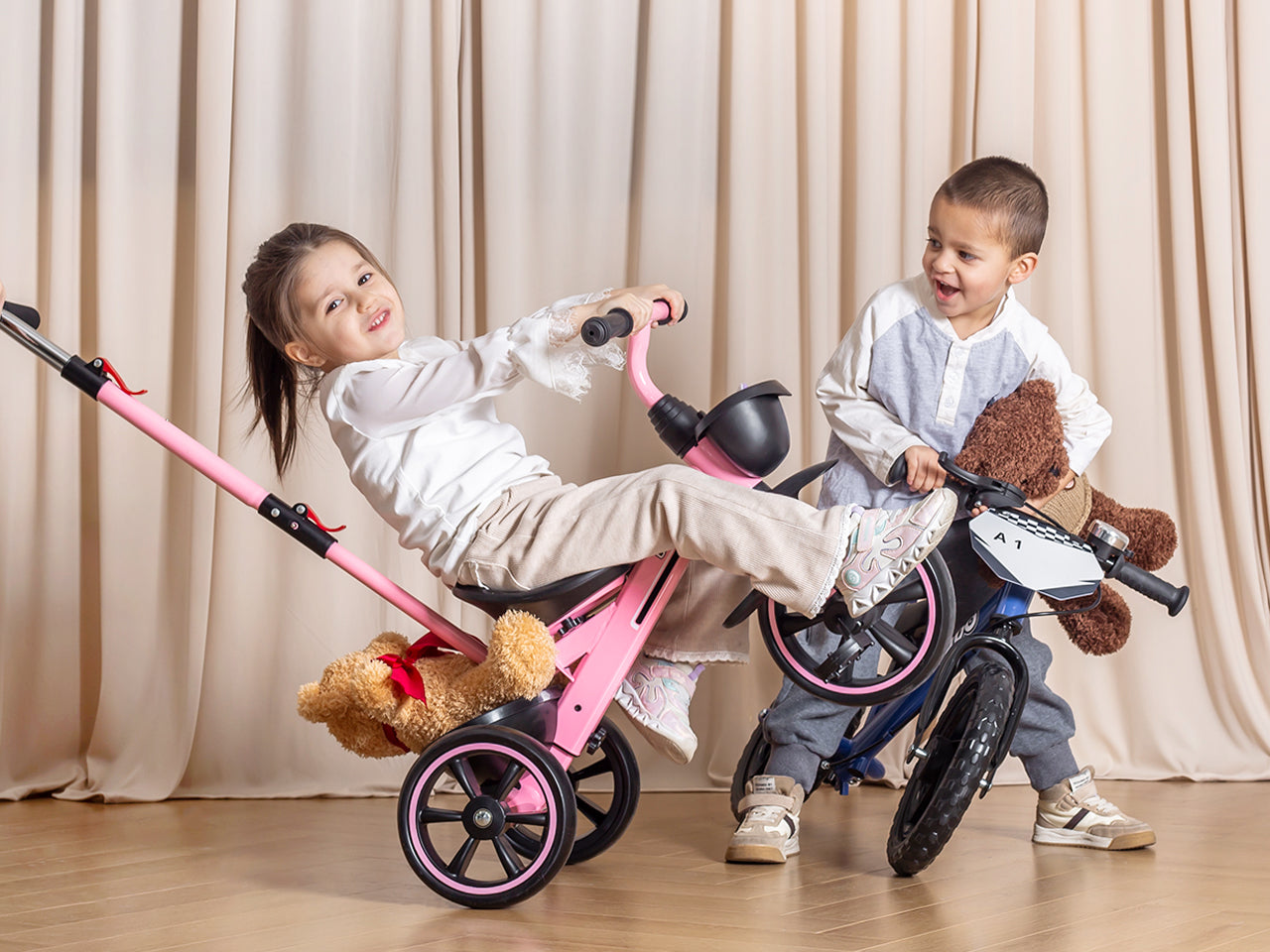
For a child around 18 months and older, depending on the specific product and developmental readiness, a stroller trike can offer several experiences in one. It can start as something a parent pushes, transition into a push tricycle, and eventually allow the child to use the pedals.
The difference between the two becomes clearer when you compare a trike stroller with a traditional stroller: a traditional stroller is primarily about transporting and supporting a young child, while a stroller trike can gradually involve the child more actively as they grow.
A 7-in-1 Option for Growing Toddlers
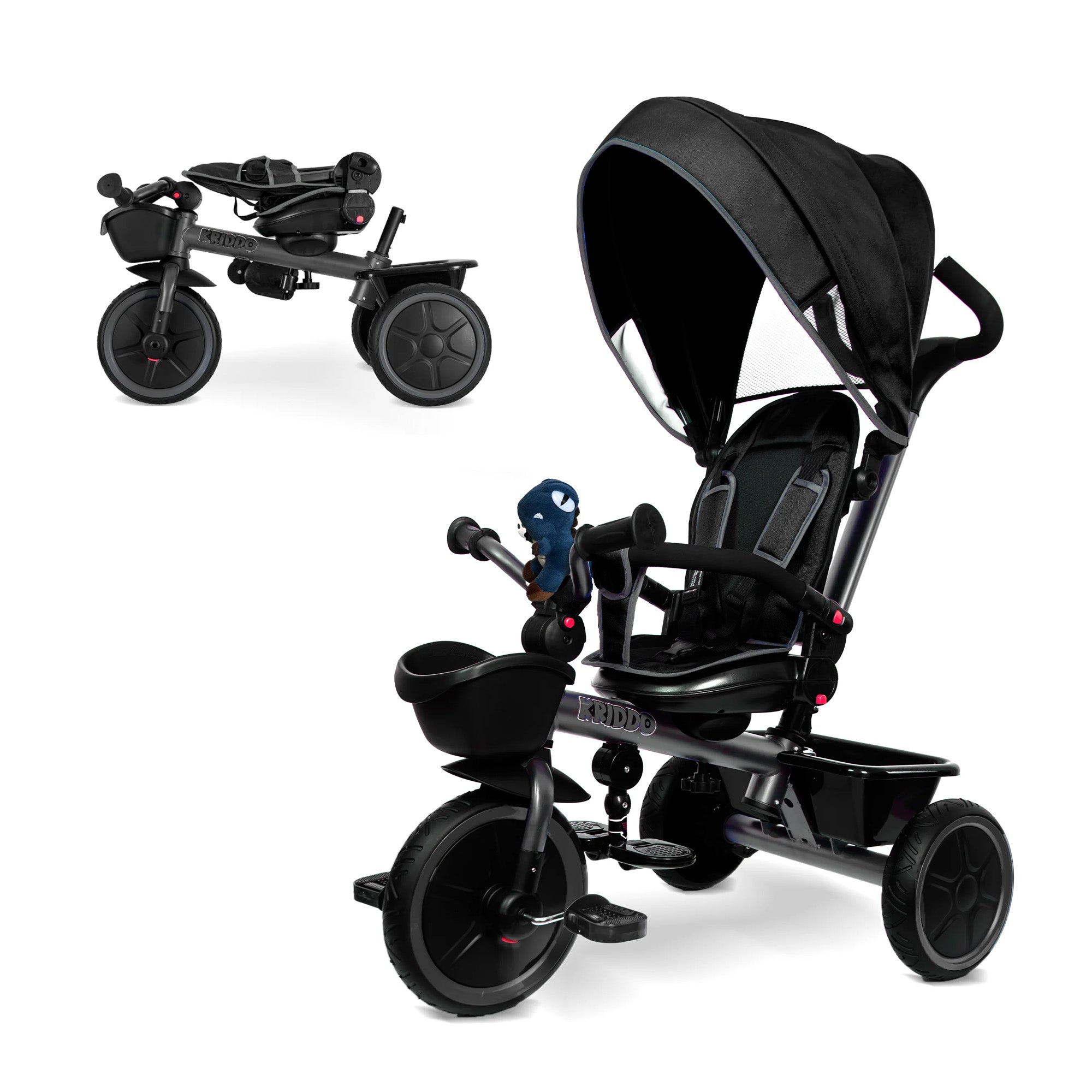
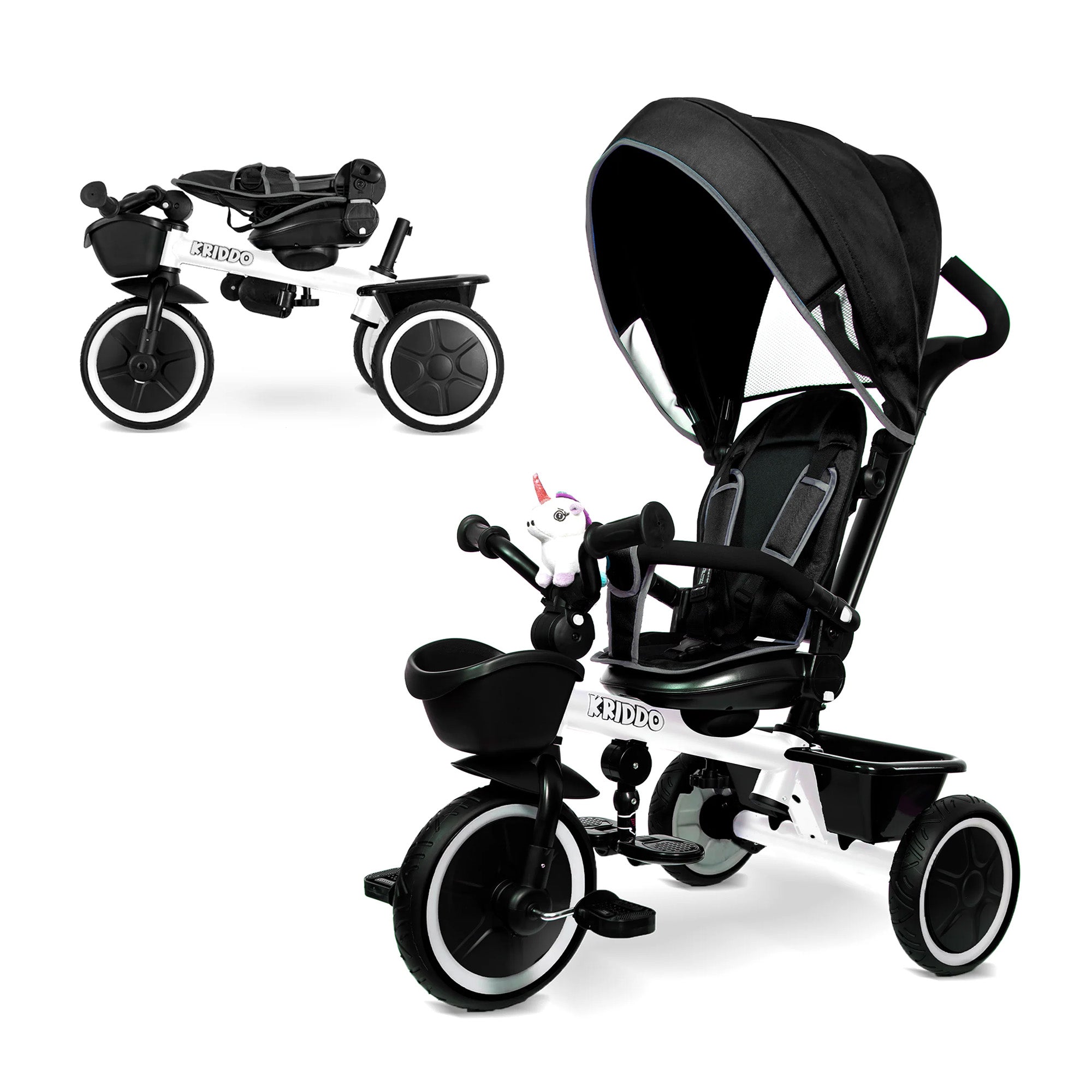
One example is the All in One,a tricycle stroller designed for children from around 18 months to 5 years old.
It’s not intended for a newborn or young baby who still needs the support of a traditional stroller. Instead, it’s designed around the changing needs of a growing toddler.
The All in One 7-in-1 kids tricycle offers several features aimed at making the transition between pushing and riding more flexible:
- 7-in-1 design that provides multiple riding modes as the child grows.
- Foldable seat and handlebars for easier storage and transportation.
- 360° safety seat designed to support closer interaction between parent and child.
- Lockable wheels that can switch between locked and rotating modes.
- Dual rear-wheel locks to help keep the tricycle secure when stopped.
- Adjustable push handle and seat angle for a more comfortable fit as the child grows.
- Removable cup holder that can be attached to the handlebar or tricycle.
The important thing is matching the product to the child’s stage. A stroller trike may be useful for a toddler, but it shouldn’t be used as a substitute for an infant stroller simply because the child wants to sit upright.
Give Your Baby Time to Grow Into the Stroller

If you’re still wondering when can a baby sit in a stroller, remember that there’s no need to rush the answer.
Six months may be a reasonable general reference point, but some babies need more time before they can sit independently with reliable head, neck, and core control.
Watch your baby instead.
Can they sit without support? Can they keep their head steady? Do they stay upright without constantly slumping forward?
Those signs tell you much more than their exact age.
And when they are ready, choosing a stroller that matches your lifestyle can make outings much easier. Think about portability, maneuverability, wheels, brakes, and how long you expect to use it.
The transition doesn’t have to happen all at once. Your baby gets stronger a little at a time, and eventually that first stroller ride in an upright seat will probably feel much more ordinary than you imagined.