




Trike Stroller vs Stroller:
A Real-Life Comparison for Parents Who Hate Buying Twice
Emily | 27th, Jan
Buying baby gear sounds easy until you actually have to live with it.
At first, everything feels urgent—safety, comfort, convenience. Later, different questions creep in. Will my child get bored? Will this still work next year? Am I about to buy something that’ll end up collecting dust in the garage?
If you’re trying to decide between a traditional stroller and a trike stroller, this isn’t about which one looks better online. It’s about how your child grows, how you actually move through your day, and whether the gear you choose keeps up—or slows you down.
Let’s talk honestly.

The Traditional Stroller: Reliable, Predictable, and Familiar
There’s a reason strollers remain a family staple. When you’re trying to get through a grocery store, walk around the neighborhood, or spend an entire afternoon at the park, having a comfortable seat for your child can make the whole experience easier.
Traditional strollers offer several everyday advantages:
- Easy storage: Most models can fold down and fit into a car trunk or closet.
- Safety: Harnesses and other safety features help keep your child securely seated.
- Comfort: Padded seats and adjustable backrests give children a place to sit, relax, or nap.
- Smooth transportation: Stroller wheels and suspension can make uneven sidewalks easier to handle.
- Support for younger children: Depending on the model, stroller use can begin around 6 months. Parents should still check the manufacturer's requirements and make sure their baby is developmentally ready.
If you’re unsure about when your baby is ready for stroller seating, age is only part of the picture. The child’s ability to sit independently and the stroller’s own safety requirements also matter.
Honestly, there are days when the most important stroller feature is simply being able to put a tired toddler somewhere safe and comfortable while you finish the walk home.
What Is a Trike Stroller, Really?
Traditional strollers have a pretty familiar setup. There are wheels on the bottom, a comfortable seat, safety restraints, a frame that may fold for storage, and a handle that lets a parent push and steer. Many also have a canopy to help protect little passengers from the sun.
A toddler tricycle starts with a different purpose. It’s designed for children to ride and eventually pedal on their own. Modern models, though, can combine that riding experience with several stroller-like features.
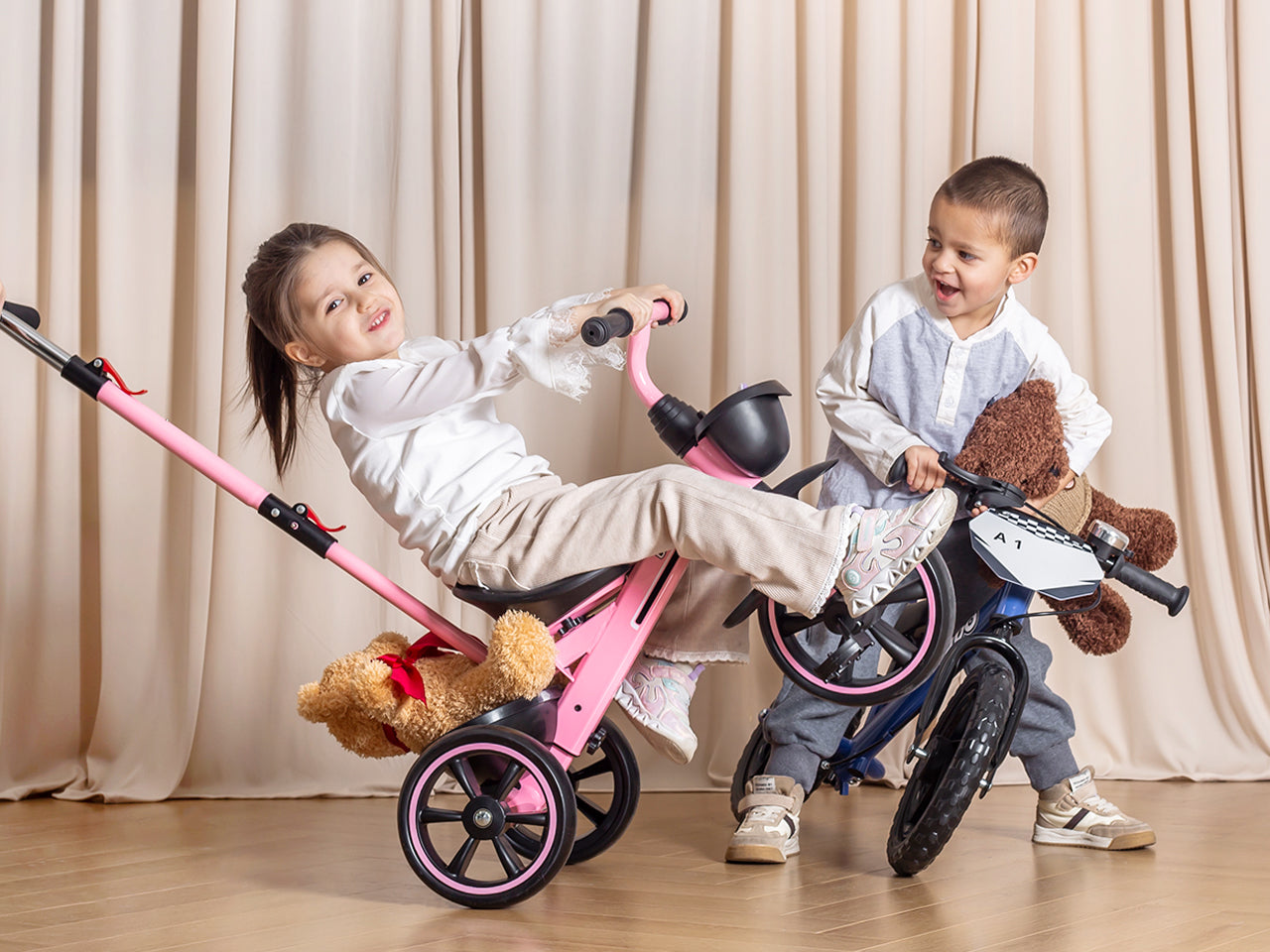
Some multi-function stroller trikes include a rear push handle, safety harness, comfortable seat, and canopy. When your child is still too young to control the tricycle, you can do the pushing and steering. As they grow, they can gradually take over more of the ride.
That’s what makes a tricycle stroller different from a basic tricycle. It can move from parent-controlled transportation toward independent riding as your child develops.
Can a Tricycle Stroller Replace a Regular Stroller?
Sometimes, but it shouldn’t automatically be treated as a complete stroller replacement.
For a short neighborhood walk, a playground trip, or a quick errand, a tricycle stroller can be a really practical option. You get parent control when you need it, while your child gets a more interactive way to experience the outing.
A compact model can also be appealing if storage space is limited or you want something that feels less bulky than a full-size stroller.
But longer outings tell a different story.
If your child regularly falls asleep while you’re out, needs a deeply reclined position, requires extra support, or spends several hours sitting, a traditional stroller will often have the advantage. Parents also tend to appreciate the larger storage baskets and more straightforward pushing experience when they’re carrying everything from diapers to snacks.
When comparing tricycle stroller vs stroller, it helps to think about what you’re actually doing on a typical day:
- Short and interactive outings: A tricycle stroller can be a great fit.
- Long trips, naps, and comfort-focused outings: A traditional stroller usually makes more sense.
- Independent outdoor riding: A traditional toddler tricycle may be the more direct choice.
So a tricycle stroller is best viewed as a flexible hybrid. It can cover some stroller needs while also giving your child opportunities to become an active participant.
A Lightweight Travel Stroller for Everyday Outings: Cove Baby Stroller
For parents who want the simplicity of a traditional stroller without carrying around a heavy frame, the KRIDDO Lightweight baby stroller is designed for everyday trips, travel, and outdoor walks.
- Comfortable seat: The roomy seat has a backrest that adjusts from 110° to 170°, plus a two-position footrest.
- Sun protection: An oversized UPF 50+ canopy helps protect your child during sunny walks.
- Designed to grow with your child: It’s made for children from 6 months to 40 pounds and includes a removable safety system that switches between a five-point and three-point harness.
- Easy maneuvering: Front swivel wheels, built-in suspension, and 360-degree rotation help with crowded sidewalks, stores, and tight spaces.
- Everyday durability: The wheels can handle paved surfaces and grass, while rear brakes provide reliable stopping.
- Useful storage: The under-seat basket and included mom bag give parents room for diapers, wipes, drinks, snacks, toys, and other daily necessities.
For a family that spends a lot of time traveling or running errands, the lighter frame can be a real advantage. You’re less likely to think twice about bringing it along simply because it’s a pain to lift.
Trike Stroller Advantages (Clear, Practical, No Fluff)

This is where a trike stroller separates itself from a standard stroller. Not with one dramatic feature, but with a combination of practical advantages that show up over time.
Here’s why many parents choose a trike stroller instead of buying multiple products:
Grows with your child from toddlerhood to early preschool
Many trike strollers are designed for children roughly 18 months to around five years old. Seat height, footrests, pedals, and steering functions adjust as your child grows, extending the product’s usable lifespan.
Parent control when you need it, child control when they’re ready
A rear push handle allows adults to steer completely in early stages. Later, control shifts naturally to the child, without forcing an abrupt transition.
Encourages active participation instead of passive sitting
Toddlers can hold handlebars, rest feet on pedals, and eventually pedal on their own. This keeps them engaged during walks rather than just watching the world go by.
Supports gross motor development through daily use
Pedaling, steering, and coordinating movement help strengthen leg muscles, improve balance awareness, and build early cycling confidence—without formal “practice.”
Reduces the need to buy a separate stroller, push trike, and first tricycle
One product replaces multiple stages of gear, saving storage space and long-term cost.
More engaging for longer outings
Children who feel involved tend to resist less. Walks last longer, tantrums happen less often, and parents aren’t constantly negotiating “five more minutes.”
These advantages don’t scream for attention—but they quietly add up.
A Closer Look at a Multi-Stage Example
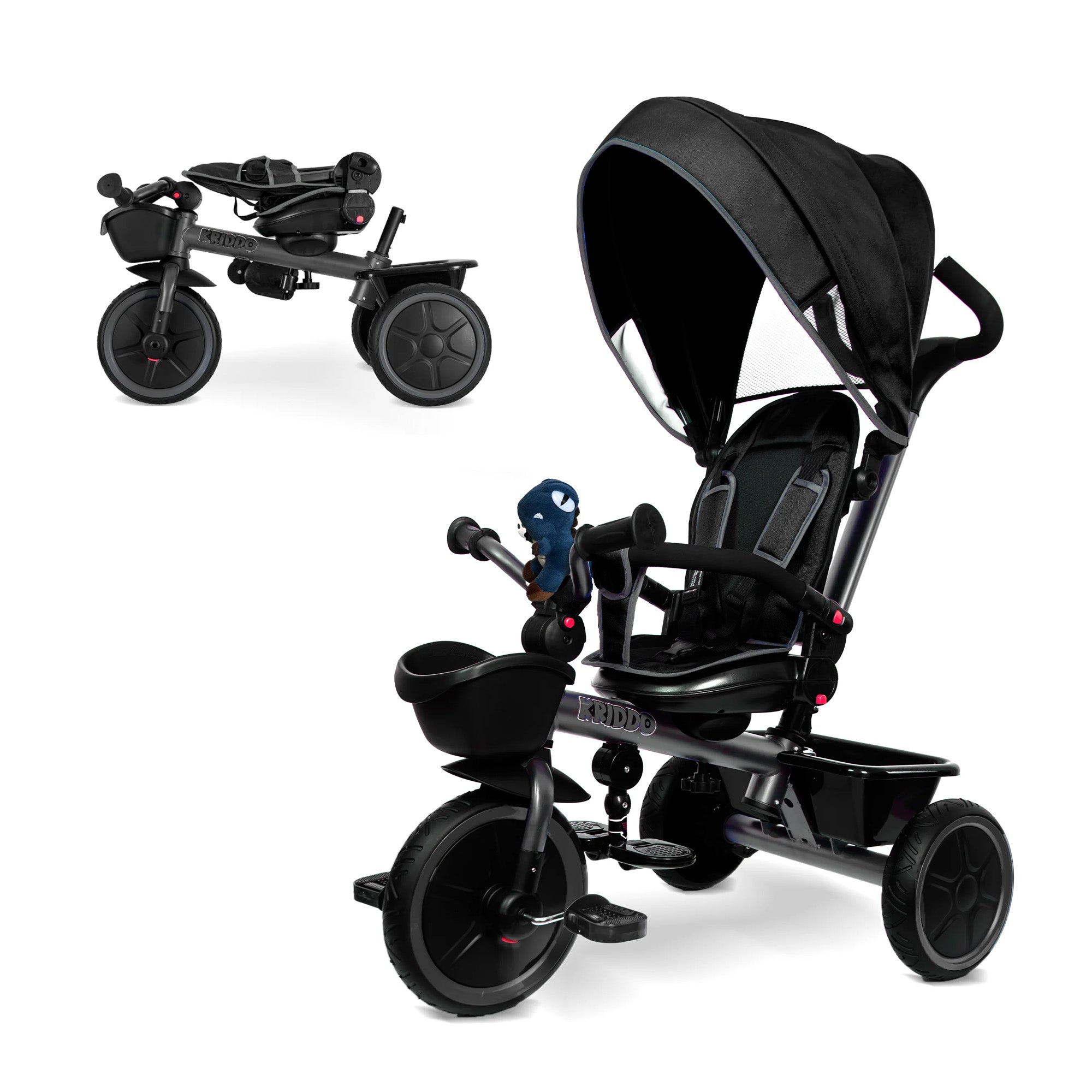
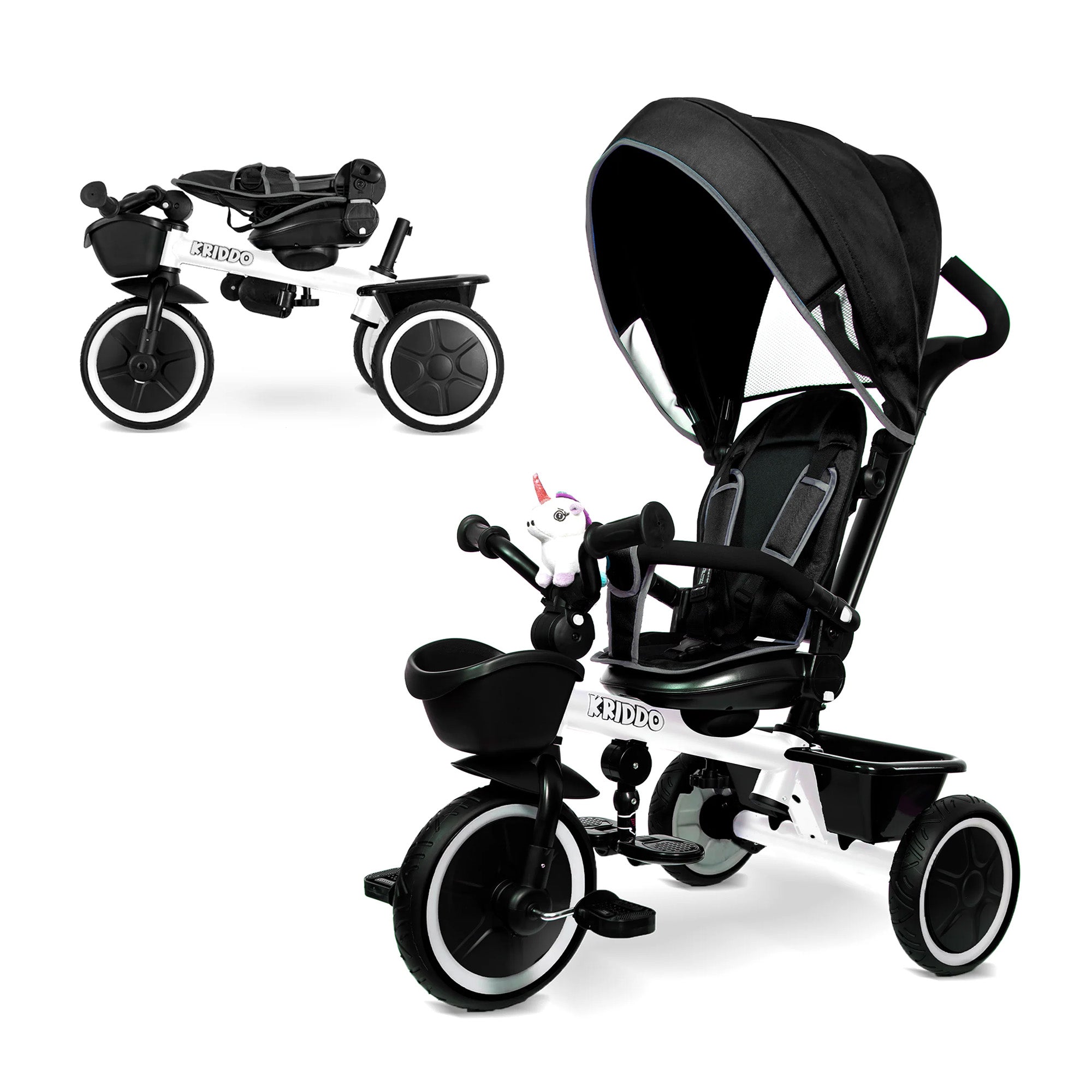
A trike stroller with canopy is a good example of how this progression plays out in real life. This type of trike stroller transitions through seven modes, starting as a fully parent-controlled stroller and ending as an independent tricycle. The same frame supports each stage, adjusting for height, comfort, and control.
Key functional highlights include:
- Adjustable seat positioning for different growth phases
- Push handle that gives parents full directional control
- Integrated front-wheel locking for stationary safety
- Canopy for sun protection
- Machine-washable seat padding for easy cleanup
It’s not about complexity. It’s about not having to replace gear every time your child hits a new milestone.
Where Traditional Strollers Still Win
A fair trike stroller vs stroller comparison means acknowledging where strollers still hold the advantage.
Strollers excel when:
- You need a lightweight, compact fold for frequent car travel
- Storage space matters more than engagement
- Your child naps often during outings
- You’re navigating crowded indoor environments
Strollers are designed for smooth rides and long sits. For families constantly on the move—airports, malls, day-long errands—they remain incredibly useful.
No argument there.
Budget Reality: One Big Purchase or Several Small Ones?
Upfront, a trike stroller can look expensive compared to a basic stroller. But cost and value aren’t the same thing.
When one product replaces several years of gear purchases, the long-term math changes. That’s especially true for families who dislike clutter and constant upgrades.
And if a full-featured trike stroller feels out of reach, there are simpler push trikes under $100 that still offer parent handles and basic safety features. They won’t replace a stroller entirely, but they introduce the same core idea—shared control and gradual independence.
And for parents focused on choosing quality over quantity, this kind of long-term thinking matters, especially when parents start paying attention to well-rounded toddler tricycle designs that age with the child.
So… Trike Stroller vs Stroller?

When it comes to tricycle stroller vs stroller, there isn’t one universal winner.
A traditional stroller is usually the better everyday transportation tool when comfort, naps, storage, and longer outings are your priorities. A tricycle stroller makes more sense when you want those parent-controlled features while also giving your toddler a path toward active riding.
For many families, the choice doesn’t have to be either-or.
Keep the stroller for long trips, travel, shopping, and days when your child is likely to get tired. Use the tricycle stroller for shorter walks, playground trips, and those moments when your toddler is eager to say, “I do it myself.”
That way, each one has a job—and you don’t have to force one product to do everything.