




6 Essential Types of Kids Tricycles Every Parent Should Know
Tina | 11th, Feb
When parents start searching for the right type of kids tricycles, it usually begins with something simple: “My toddler needs a trike.” But within minutes, that simple idea turns into dozens of options—metal frames, plastic frames, push handles, foldable designs, multi-stage conversions. It adds up fast.
If you’re raising a child who’s already exploring balance bikes or ride-on toys, you know early riding experiences matter. Coordination develops quickly between ages one and three. Confidence builds through repetition. A good tricycle doesn’t just move forward—it helps a child understand motion, steering, rhythm, and independence.
Let’s walk through the main types of kids tricycles and what actually separates them. Not marketing noise. Just practical differences that affect real families.
1. Classic Tricycles: The Original Three-Wheel Ride
There’s a reason the classic design hasn’t disappeared. It works.
A Classic Tricycle typically features a steel frame, a large front wheel with attached pedals, two rear wheels spaced wide apart, and a low seat. The structure feels grounded. Stable. Predictable.
This type of kids tricycles is ideal for toddlers learning to pedal for the first time. The wide base reduces tipping. The low center of gravity keeps their feet close to the ground. And the mechanical simplicity—no gears, no complex adjustments—lets children focus on the basics.
Parents appreciate classic models because they’re durable. Metal frames absorb bumps and scrapes without cracking. The ride feels solid. Almost nostalgic.
Sometimes simple is exactly what works.
Featured Products
2. Foldable Tricycles: Built for Movement Beyond the Driveway
Here’s the thing—families don’t stay in one place.
You travel. You visit parks. You take weekend trips. And suddenly that sturdy trike feels bulky when you’re trying to fit everything into a car trunk.
That’s where foldable designs make sense.
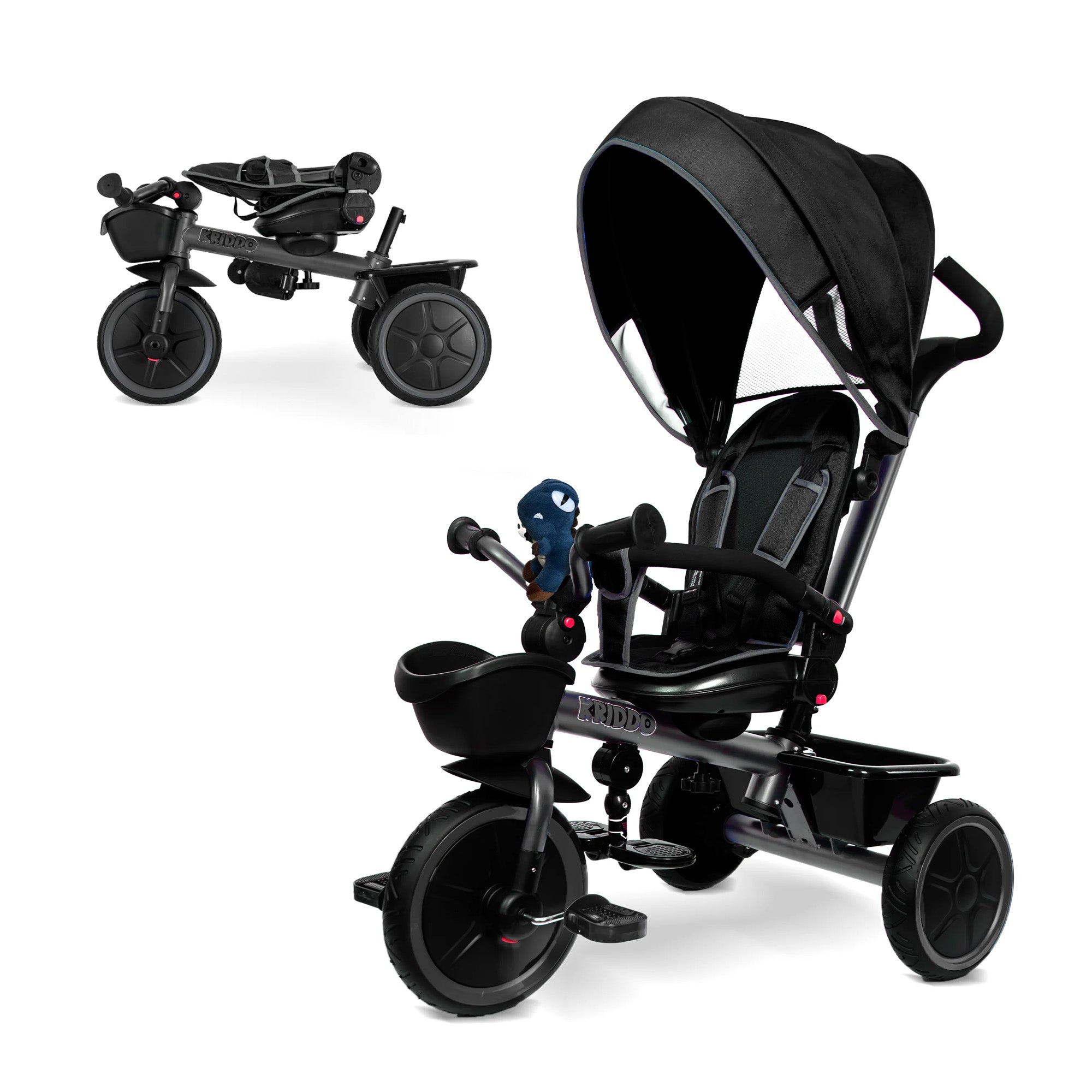
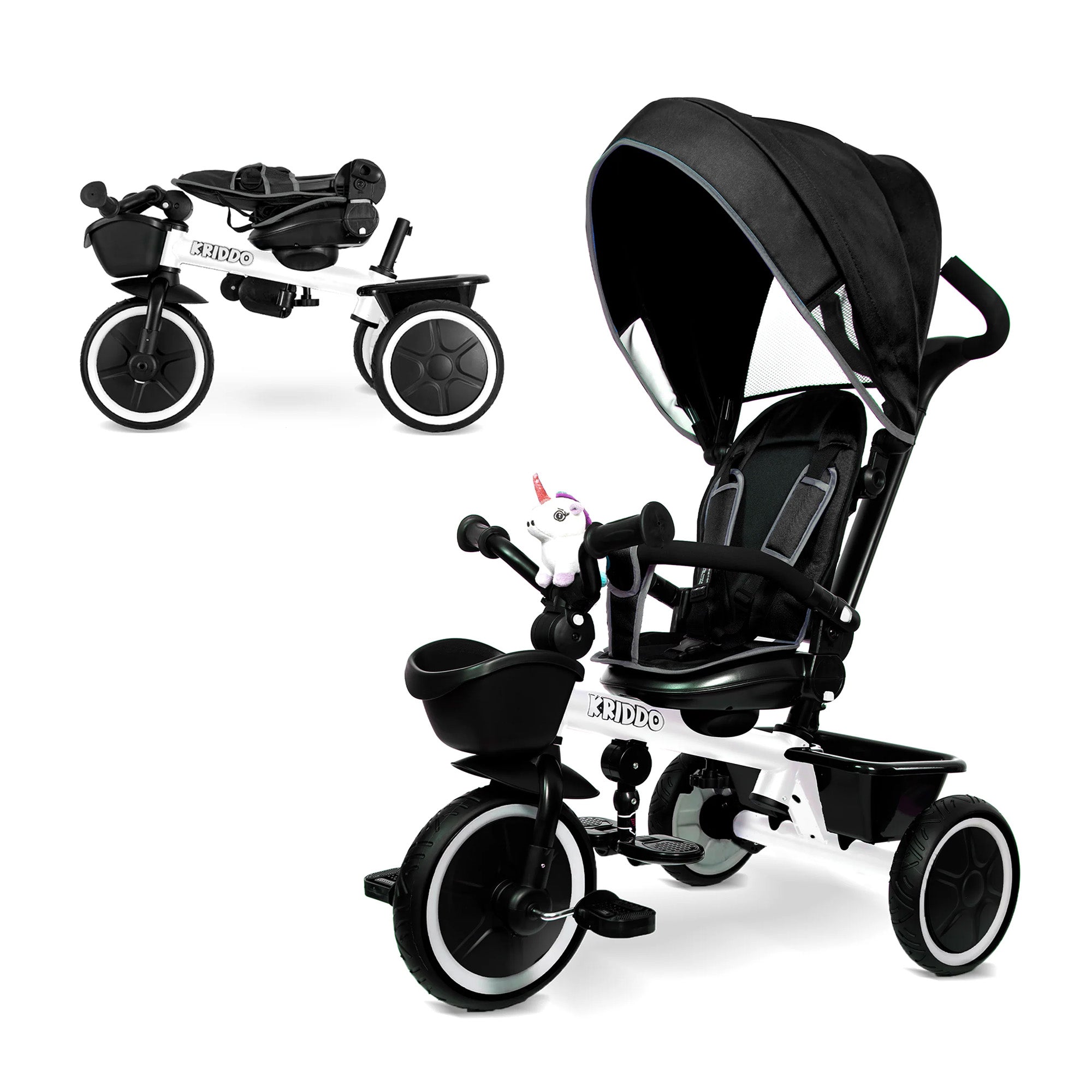
A foldable type of kids tricycles features a collapsible frame that reduces storage space dramatically. It’s especially useful for families living in apartments or homes without large garages.
For parents who enjoy traveling with children and want mobility that adapts to real life, portability matters. Practical travel advice often emphasizes flexibility and light gear.
Foldable trikes offer:
- Compact storage
- Easier transport in vehicles
- Lightweight frames
- Quick setup and breakdown
You still get stability and comfort. You just gain convenience. And honestly, convenience counts.
Featured Products
3. Push Handle Tricycles: Guided Confidence
Not every toddler is ready to pedal independently. Some are still developing coordination. Others just feel more secure when a parent is close.
A push handle tricycle bridges that gap beautifully.
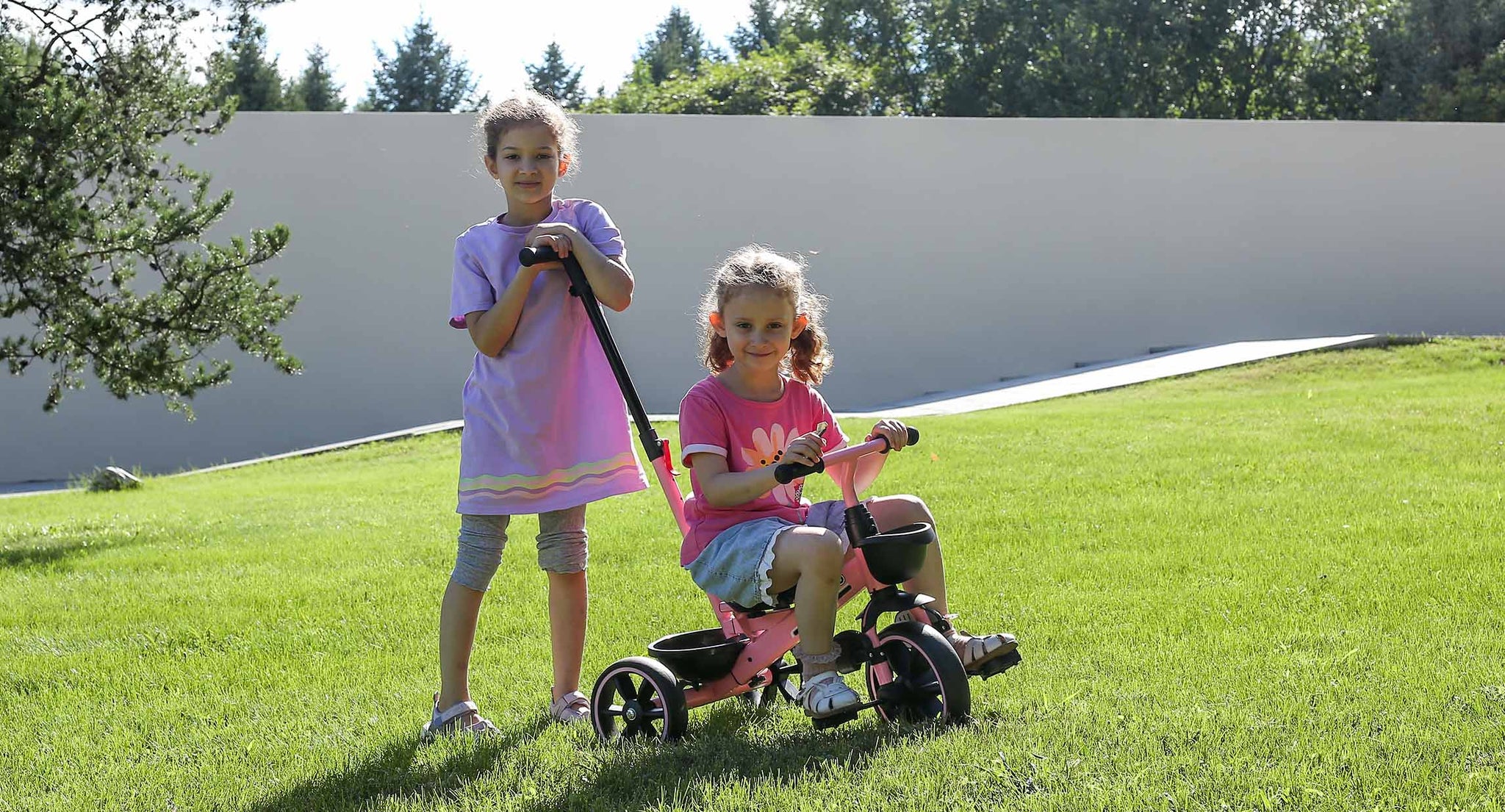
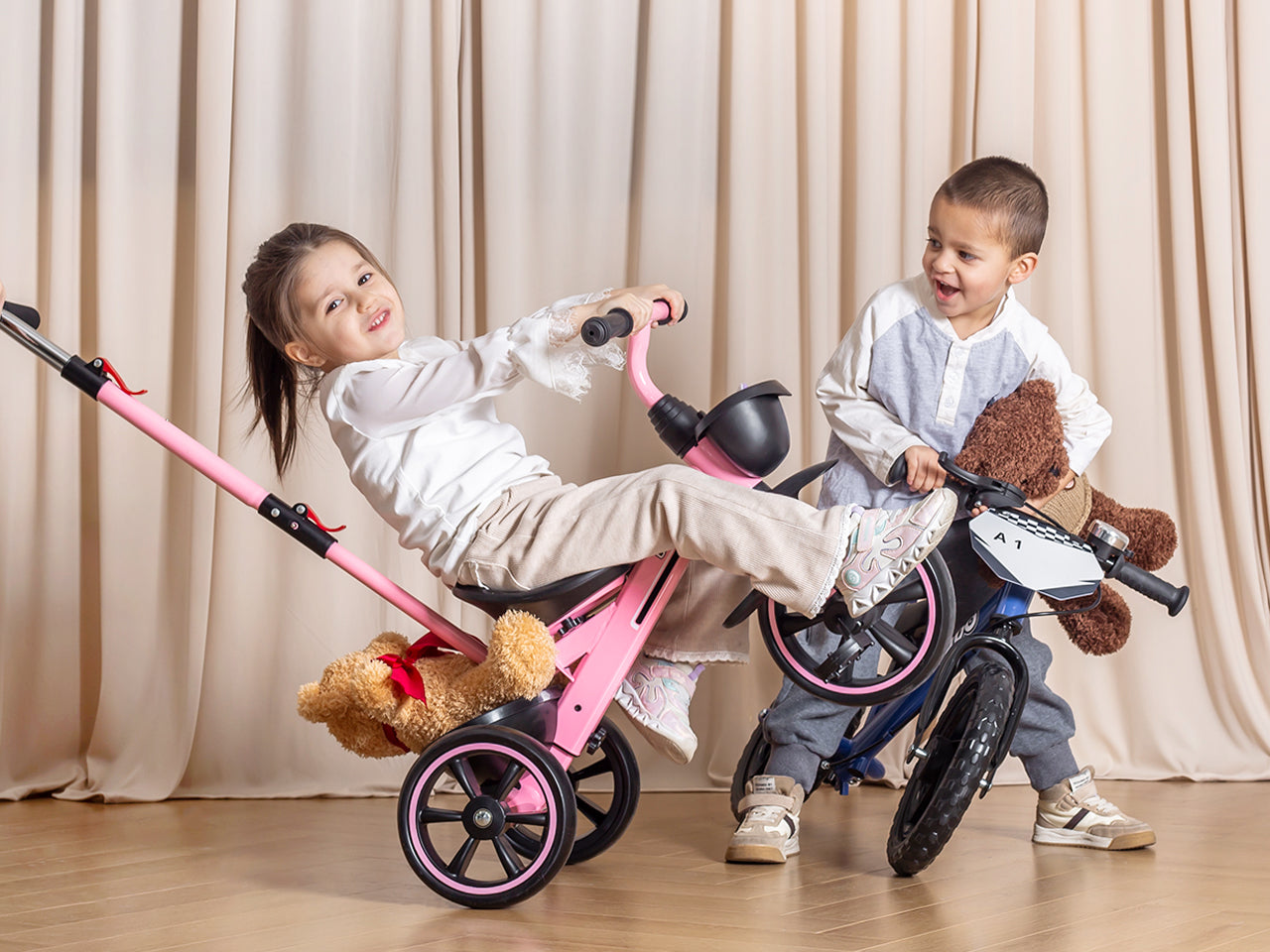
These models include a rear steering handle that allows parents to guide direction while the child sits comfortably in the seat. Many include footrests so little legs don’t have to pedal until they’re ready.
This type of kids tricycles offers gradual independence. Early on, parents steer. Later, the push handle can often be removed. Eventually, the child pedals solo.
That transition feels natural. There’s no pressure. No sudden shift.
It’s a steady climb toward independence rather than a leap.
Featured Products
4. Multi-Function Stroller Trikes: One Product, Multiple Stages
Some designs go a step further and combine stroller features with tricycle structure.
A stroller trike—sometimes called a multi-stage tricycle—starts out functioning like a stroller. It includes a safety harness, protective canopy, and parent push control. As your child grows, those components can be removed. The trike evolves into a fully independent riding toy.
This type of kids tricycles appeals to parents who value long-term use. Instead of buying a stroller and later buying a tricycle, one product adapts across stages.
Early phase:
- Parent control
- Safety harness
- Footrests
Middle phase:
- Partial independence
- Reduced accessories
Final phase:
- Full pedaling control
- Independent steering
It’s efficient. And for families watching budgets or storage space, efficiency matters.
Featured Products
5. Plastic Tricycles: Lightweight and Playful
Now let’s talk materials.
Plastic tricycles are often lighter than metal models. They’re easier for toddlers to maneuver. They also tend to feature bright colors and playful designs that instantly attract young children.
Plastic frames resist rust and are easier to shape into creative forms. Many include fun accessories like bells or decorative elements that make riding feel exciting.
When comparing materials, discussions like plastic vs metal tricycle comparisons often highlight key differences.
Plastic models tend to win in:
- Lightweight design
- Portability
- Visual appeal
- Lower cost
However, they may not feel as heavy-duty as metal frames. That trade-off is important.
For younger toddlers who prioritize ease of movement, plastic can be a great match.
Featured Products
6. Metal Tricycles: Durable and Built to Last
There’s something reassuring about a solid metal frame.
A metal toddler tricycle often feels heavier and more stable. It handles rough sidewalks and driveway bumps without issue. The structure doesn’t flex much. It feels dependable.
Metal tricycles tend to last longer, especially if passed down to younger siblings. Scratches don’t compromise structural integrity. And many parents appreciate the classic aesthetic.
Advantages typically include:
- Higher durability
- Stronger frame stability
- Longer lifespan
- Traditional design appeal
They may weigh more, but that weight can increase balance. It’s a subtle difference, but noticeable.
If longevity is the priority, metal usually delivers.
Featured Products
Choosing the Right Type of Kids Tricycles
So how do you decide?
Start with your child’s age and coordination level. A push handle model may make sense for younger toddlers. A classic metal frame may work better for confident riders. A foldable design fits traveling families. A multi-stage trike stretches long-term value.
Also think about storage space. Transport needs. Budget. And honestly—your child’s personality.
Some kids want bright colors and bells. Others just want something sturdy that moves fast.
The right type of kids tricycles isn’t about trends. It’s about fit.
When a child feels comfortable, they ride more. When they ride more, they build coordination. When coordination improves, confidence follows.
And that’s the real goal.