




What Is a Stroller Wagon?
A Parent’s Guide to Choosing the Right Fit
Dean | 12th, Oct
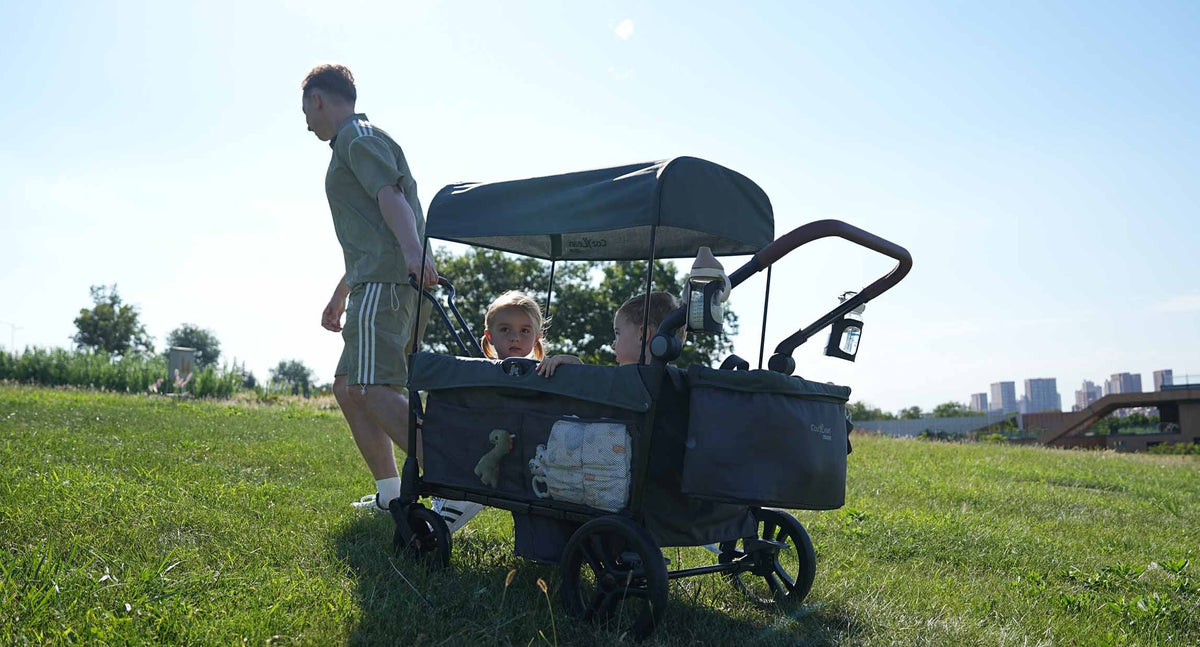
If you've visited a zoo, farmers market, or neighborhood park recently, you may have spotted a new way for families to get around. A sturdy, wagon-style ride rolls along with two, four, or even more children sitting inside, snacks in hand and a canopy overhead. Meanwhile, a parent steers with one hand and keeps a coffee in the other.
This increasingly familiar sight raises a common question: what is a stroller wagon, and how is it different from a traditional stroller or a regular wagon?
A stroller wagon combines the roomy design of a wagon with features intended to help parents transport young children. Depending on the model, it may include child-sized seats, safety harnesses, a canopy, all-terrain wheels, and plenty of space for bags and snacks. For families with multiple little ones, it can make certain outings easier to manage.
However, choosing one involves more than deciding whether it looks spacious or convenient. Seating capacity, maneuverability, safety features, storage, and your family's everyday routine all deserve a closer look.
What Is a Stroller Wagon?

A stroller wagon is a four-wheeled, wagon-shaped child carrier designed to accommodate one or more children, depending on its configuration and weight limits. Unlike many traditional strollers, which usually arrange children in individual seats facing forward or toward a parent, stroller wagons often provide a wider, more open interior.
Some models feature side-by-side seating, while others allow children to face each other. Certain designs include individual seats and harnesses, and some provide additional room for carrying everyday essentials alongside the children.
Many stroller wagons also borrow features from outdoor wagons. Larger wheels can help them travel over suitable grass, packed dirt, and other uneven surfaces, while a sturdy frame supports the seating area. Depending on the design, parents may be able to push the wagon using a handlebar, pull it with a separate handle, or switch between the two.
A canopy can provide shade and some protection from light weather, while storage compartments help keep snacks, water bottles, spare clothes, and toys organized. The exact features vary, so it's important to check what each model actually offers.
For children, one appealing feature is the opportunity to ride alongside a sibling or friend. For parents, the main attraction is having a single place for children and some of the supplies needed for a day out.
Why Are Stroller Wagons Becoming Popular With Families?
Family outings rarely involve just the children. Parents may also need to bring diaper bags, snacks, drinks, jackets, toys, and other essentials. When several children come along, carrying everything while keeping everyone comfortable can become a challenge.
A stroller wagon offers a shared space for children and belongings, which can be especially useful during longer outdoor activities. Rather than managing separate rides or carrying multiple bags, parents may be able to keep much of what they need in one place.
The roomy layout can also suit families with siblings close in age. Children can sit together, talk, and share the experience as the family moves between destinations.
Still, a stroller wagon isn't automatically the right choice for every family. Its larger frame may be less convenient in crowded shops, narrow walkways, or small vehicle trunks. Families who mostly take short neighborhood walks or run quick errands may prefer the compact handling of a traditional stroller.
The key is to consider where you'll use it most often instead of choosing solely because the design looks appealing.
9 Features to Consider When Choosing a Stroller Wagon

Not all stroller wagons offer the same seating arrangements, handling, or storage options. Before making a purchase, think about how each feature will work with your children and your usual activities.
1. Choose the Right Seating Capacity
Start by considering how many children will ride in the wagon. Many models are designed for two or four children, although configurations vary by brand.
Think about your family's current needs as well as plans for the future. A wagon intended for two children may be sufficient for a smaller family, while a larger household may need additional seating.
Remember that capacity isn't just about the number of seats. Check the manufacturer's maximum weight limit and make sure every child has an appropriate seating position.
2. Check How Easily It Pushes and Pulls
Maneuverability can make a noticeable difference during a busy outing. Some stroller wagons are designed to be pushed like a stroller, while others include a pull handle or support both methods.
Before choosing a model, consider how the handle works and how easily you can change direction. Does switching from pushing to pulling require you to move around the wagon? Can you change modes without removing the children?
A wagon that supports both pushing and pulling may offer more flexibility, but convenient switching matters just as much as having both options. Look for a design that feels manageable for the adults who will use it.
3. Review the Weight Capacity
Always check the manufacturer's maximum weight limit before buying. If you plan to transport two or more children, calculate their combined weight and account for any restrictions that apply to seats or accessories.
Don't assume that a wagon with enough physical space can safely carry any number of children. Follow the specified seating arrangement and weight limits, and avoid exceeding the recommended capacity.
4. Inspect the Safety Harnesses
Children can shift, lean, or stand up unexpectedly, especially when they're excited about being outdoors. Appropriate restraints help keep children seated as intended while the wagon is moving.
Check how many harnesses are provided, whether they fit your children's sizes, and how easily an adult can secure and release them. Each child should use the restraint system according to the manufacturer's instructions.
Never assume that a spacious interior makes a harness unnecessary. Follow the product's safety guidance even during short trips.
5. Consider the Wheel Design
Think about the surfaces your family encounters most often. Smaller wheels may be suitable for smooth sidewalks and paved paths, while larger wheels can be helpful on certain outdoor trails and uneven ground.
If you regularly visit parks or campgrounds, look for wheels designed for the terrain you expect to encounter. Keep in mind that all-terrain capability doesn't mean every wagon can safely handle deep sand, steep slopes, or rough ground.
Choose based on your actual destinations rather than the appearance of the wheels alone.
6. Look for a Comfortable, Adjustable Handle
An appropriately positioned handle can make pushing and pulling more comfortable. This is particularly important if caregivers differ in height or if several adults will use the wagon.
Check whether the handle adjusts to different positions and whether it feels comfortable to grip. A design that suits the adults using it can help make longer outings less tiring.
7. Check Folding and Storage Requirements
A large wagon can be convenient when open but challenging to store. Before buying, measure the space available in your vehicle, garage, closet, or storage area.
Compare the product's folded dimensions with your available space, and consider its weight. If you regularly lift the wagon into a trunk, you'll want to know whether you can handle it comfortably.
Also check how the wagon folds and unfolds. A straightforward folding mechanism can make it easier to prepare for outings and pack up afterward.
8. Consider Sun Protection and Cleaning
If your family spends a lot of time outdoors, a canopy can help provide shade. Check how much coverage it offers and whether it can be adjusted to suit different conditions.
Remember that a canopy doesn't replace other sun-protection measures, and its coverage varies by design.
Cleaning is another practical consideration. Children may drop crackers, spill drinks, or track dirt into the seating area. Removable fabrics, accessible corners, and surfaces that can be wiped clean may save time after messy outings.
9. Think About How Children Get In and Out
Independence matters to many toddlers. Once children become eager to do things themselves, repeatedly lifting them into a wagon can quickly become tiring for parents.
Look at the side height, entry points, and any built-in access features. A lower side or designated entry may make it easier for some children to climb in and out, while taller sides may require more adult assistance.
Ease of entry should never take priority over safety. Follow the manufacturer's instructions for getting in and out, keep the wagon stationary during entry and exit, and supervise children closely.
Is a Stroller Wagon Right for Your Family?

A stroller wagon may suit families who regularly take several children to parks, outdoor events, sporting activities, or other destinations where extra space is useful. Its shared seating and storage can make it easier to bring children and everyday essentials along on the same outing.
However, families with newborns or younger babies need to pay particular attention to age requirements and seating compatibility. Not every stroller wagon is designed for infants who cannot sit independently. Use a newborn only if the specific model and an approved accessory are explicitly designed for that purpose.
Your vehicle size, home storage, preferred terrain, and budget also matter. A spacious wagon may be useful at an outdoor festival but cumbersome on a crowded sidewalk or during a quick shopping trip.
Before purchasing, compare the features that affect your family's everyday experience, not just the number of seats or the size of the canopy. The right stroller wagon should suit your children, your activities, and the practical realities of getting out the door.