



When Is a Wagon Stroller Practical for Families?
Kate | 21st, Oct
Family outings are fun, but getting everyone and everything out the door can feel like a workout. There are snacks to pack, toys to bring, water bottles to fill, and little legs that may get tired long before the day is over. For many parents, a wagon stroller offers a practical way to make these adventures easier.
Children enjoy having room for their favorite toys, stuffed animals, and snacks, while parents appreciate the extra space for everyday essentials. Unlike a conventional stroller designed mainly for transporting a child, a wagon stroller can also carry picnic supplies, beach gear, sports equipment, and other family necessities.
But when is a wagon stroller practical for families? The answer depends on your children's ages, your favorite activities, and how much you typically carry. Here are the situations where a wagon stroller can make family life more convenient.
When Can a Child Start Using a Wagon Stroller?
Most wagon strollers are intended for children who can sit upright without assistance, typically around 12 months of age or older. Since these wagons generally cannot recline completely flat and usually do not accept infant car seats, they are not appropriate for newborns or young babies who have not developed sufficient head, neck, and torso control.
Although many babies develop stronger sitting control between 9 and 12 months, readiness varies from child to child. The manufacturer's minimum age, seating requirements, and weight restrictions should always guide your decision.
A traditional stroller may be a better fit during infancy, while a wagon stroller can become more useful as children grow and family outings change. The two options differ in their seating arrangements, storage capacity, and intended uses, so consider how each would fit into your routine before choosing between a wagon stroller and a traditional stroller.
The usefulness of a wagon stroller often extends beyond the toddler years. Depending on the model, older preschoolers and young school-age children may still have room to ride when they need a break. Some models support 50 to 75 pounds per seat, while many standard strollers have overall weight limits of approximately 40 to 50 pounds. These figures vary by product, so always confirm the manufacturer's specifications rather than relying on age alone.
4 Situations When a Wagon Stroller Makes Sense

1. Family Trips to Parks, Beaches, and Outdoor Events
Outdoor adventures often require more supplies than parents expect. A trip to the zoo might involve snacks, drinks, sunscreen, and a change of clothes. A beach day can mean towels, sand toys, folding chairs, and a cooler. At a campground or outdoor festival, the list can grow even longer.
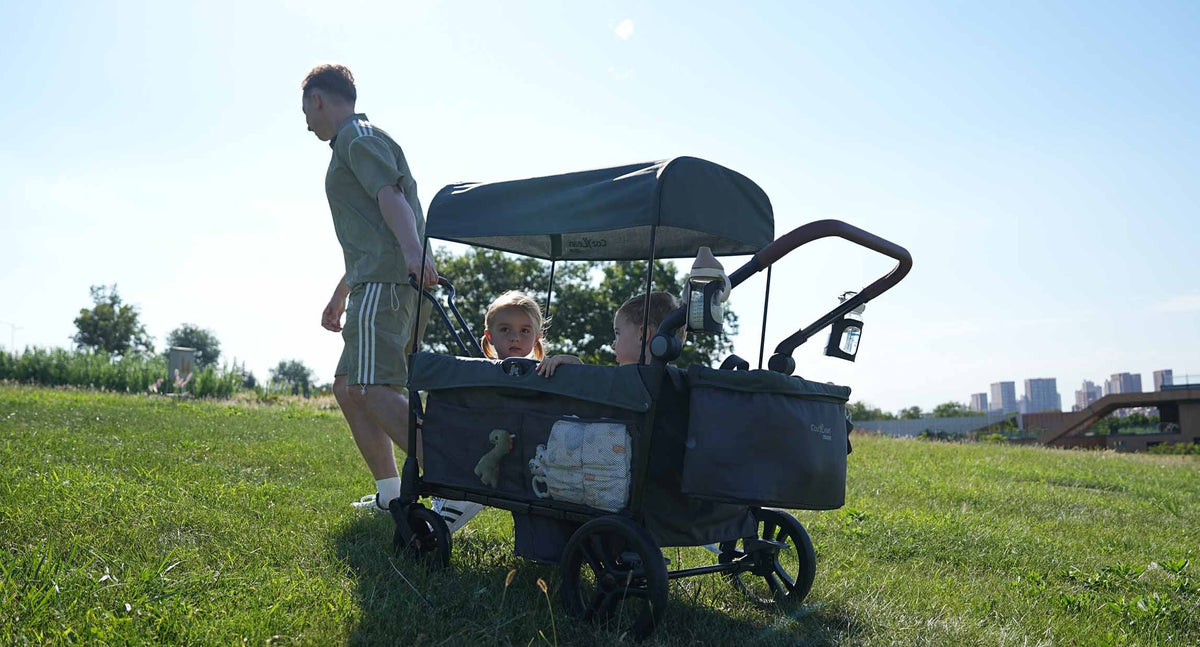
A wagon stroller provides space for children to rest while helping parents transport the items needed throughout the day. Depending on its wheel design and construction, it may also work well on grass, packed dirt, or gravel.
This extra capacity can be especially helpful when your destination involves plenty of walking. Instead of carrying several bags while keeping an eye on the children, you can organize many of your essentials in one place.
Good preparation also makes family travel less stressful. Packing snacks, planning rest stops, and choosing practical equipment can make a difference when you're figuring out how to travel with kids without losing the fun.
Keep the terrain in mind when choosing a model. Not every wagon stroller is suitable for deep sand, rocky trails, or steep slopes, so check the manufacturer's recommendations before heading out.
2. Families With Multiple Young Children
Taking one child on an outing can involve plenty of preparation. When two or more children come along, the challenge grows: everyone may need different snacks, extra clothing, toys, or a place to rest.
A wagon stroller can help families keep multiple children and their belongings together, provided the model is designed for the number of passengers. It can be particularly convenient when children have different walking abilities or like to alternate between riding and exploring.
The storage space is useful for more than childcare essentials. Parents might pack a picnic lunch for a park visit, sports equipment for a weekend game, or jackets and drinks for an outdoor event. Having room for these items can reduce the need to carry multiple bags by hand.
Before purchasing, check the number of designated seats, individual seat limits, and the total weight capacity. Never assume that a spacious interior means additional children can ride safely.
3. When Little Legs Get Tired
Young children can be enthusiastic walkers, but their energy doesn't always last as long as the family's plans. A preschooler might happily explore a zoo for an hour before asking to be carried, even when there's still plenty left to see.
A wagon stroller can provide a convenient resting place for children who walk independently but struggle with longer outings. This is especially useful during theme park visits, community festivals, sightseeing trips, or long afternoons at the park.
Instead of carrying a tired child while managing bags and other belongings, parents can offer a break and let their little one recharge. Once the child feels ready, they can get back to exploring.
The goal isn't to stop children from walking. It's to give families more flexibility throughout the day, allowing children to enjoy independent movement without making every outing depend on how long their legs can keep going.
4. When You Want Gear That Remains Useful as Children Grow
Children quickly outgrow some baby products, which can make parents think carefully about the long-term value of a purchase. A wagon stroller may continue to serve a family after a child becomes more independent, depending on its capacity and design.
Some models accommodate children from toddlerhood into the early school years, although the permitted age and weight range varies. For families who regularly visit parks, attend outdoor events, or travel with several young children, that extended period of use can make a wagon stroller a worthwhile investment.
Its usefulness may continue after children no longer need to ride. Depending on the manufacturer's instructions, the wagon may carry picnic supplies, camping equipment, gardening tools, or toys around the backyard.
Consider how often your family spends time outdoors and whether you'll use the wagon beyond everyday transportation. A product that fits several recurring activities may offer more value than one used only occasionally.
The Everyday Benefits of a Wagon Stroller

Extra Room for Children and Family Essentials
One of the most noticeable advantages is the amount of space available. Parents can pack drinks, food, toys, and other necessities without trying to squeeze everything into a small storage basket.
For a park visit, that might mean bringing a cooler and picnic blanket. For a beach trip, it could include towels and sand toys. Some models in the KRIDDO stroller wagon collection also feature conveniences such as cup holders, making it easier to keep drinks close at hand.
Storage arrangements differ between models, so check the available compartments and accessories before choosing one. Keep belongings secured and avoid placing cargo where it could interfere with children's seating or exceed the wagon's weight limits.
Less Carrying for Parents
Carrying a child while juggling a diaper bag, water bottles, and outdoor supplies can quickly become uncomfortable. A wagon stroller lets parents transport many of these items together, reducing the need to carry everything on their shoulders.
Depending on the design, some wagons can be pushed or pulled, giving caregivers different ways to maneuver. Storage compartments may also help keep essentials organized and easy to reach.
Handling comfort still matters. A heavily loaded wagon may be difficult to maneuver on uneven ground or slopes, so choose a design that suits your strength, the terrain, and the types of trips you take most often.
Practical Uses Beyond Childhood
A wagon stroller may remain helpful even after children become too big to ride or prefer walking. It can potentially carry supplies for picnics, camping trips, backyard gardening, or family gatherings, provided those uses are allowed by the manufacturer.
This flexibility can make the wagon more than a temporary piece of baby gear. Instead of storing it away as soon as your children grow, you may be able to incorporate it into other family activities.
Always follow the product's instructions for loading, weight limits, and permitted uses, especially when transporting cargo rather than children.
How to Decide Whether Your Family Needs One
A wagon stroller is likely to be most practical if you regularly take long walks with young children, bring plenty of equipment, or need to transport more than one child. It can be particularly useful for families who spend weekends at parks, sporting events, outdoor festivals, and other destinations where children may need breaks.
It may be less convenient if your routine mostly involves narrow sidewalks, crowded shops, or short trips where a compact stroller is easier to steer and store. Wagon strollers can also require more room in a vehicle, making folded dimensions an important consideration.
Before making a decision, think about your children's ages, passenger capacity, storage needs, wheel design, and the surfaces you'll encounter. A wagon stroller is most valuable when its features match the activities your family already enjoys.