




What to Look for in a Baby Stroller:
A Parent’s Practical Guide
Karl | 19th, Aug
Choosing a stroller can feel strangely complicated. You walk into a store expecting to pick one, only to find yourself staring at dozens of frames, wheels, seats, baskets, brakes, and folding mechanisms.
It’s a little like the Goldilocks story. The best stroller isn’t necessarily the biggest, lightest, or most expensive one. It’s the one that fits your family, your child, and the way you actually live.
Maybe you spend your weekends walking uneven neighborhood paths. Maybe you need something light enough to lift into the car several times a day. Maybe you’re planning to have another baby and want a stroller that can eventually accommodate two children.
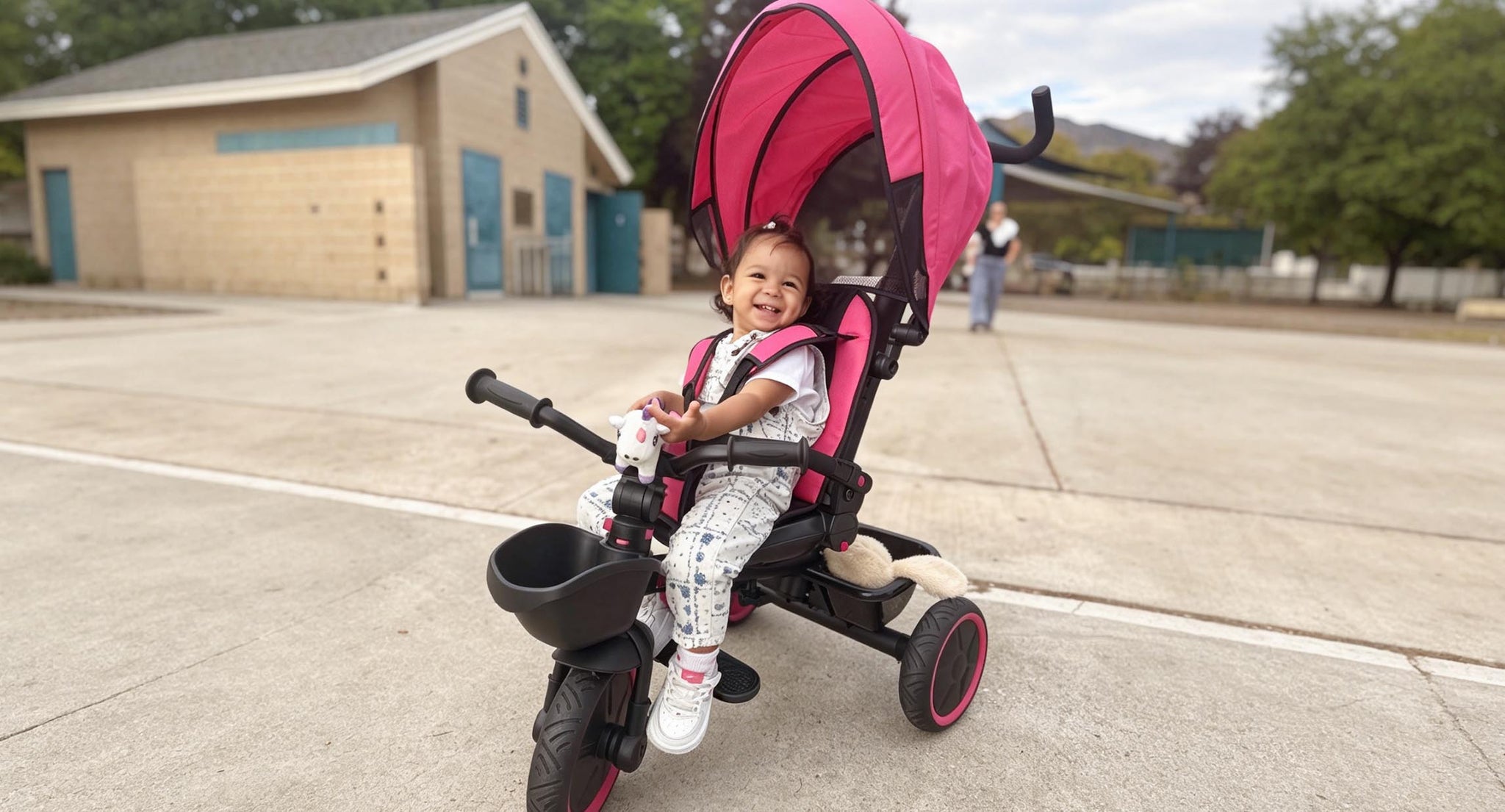
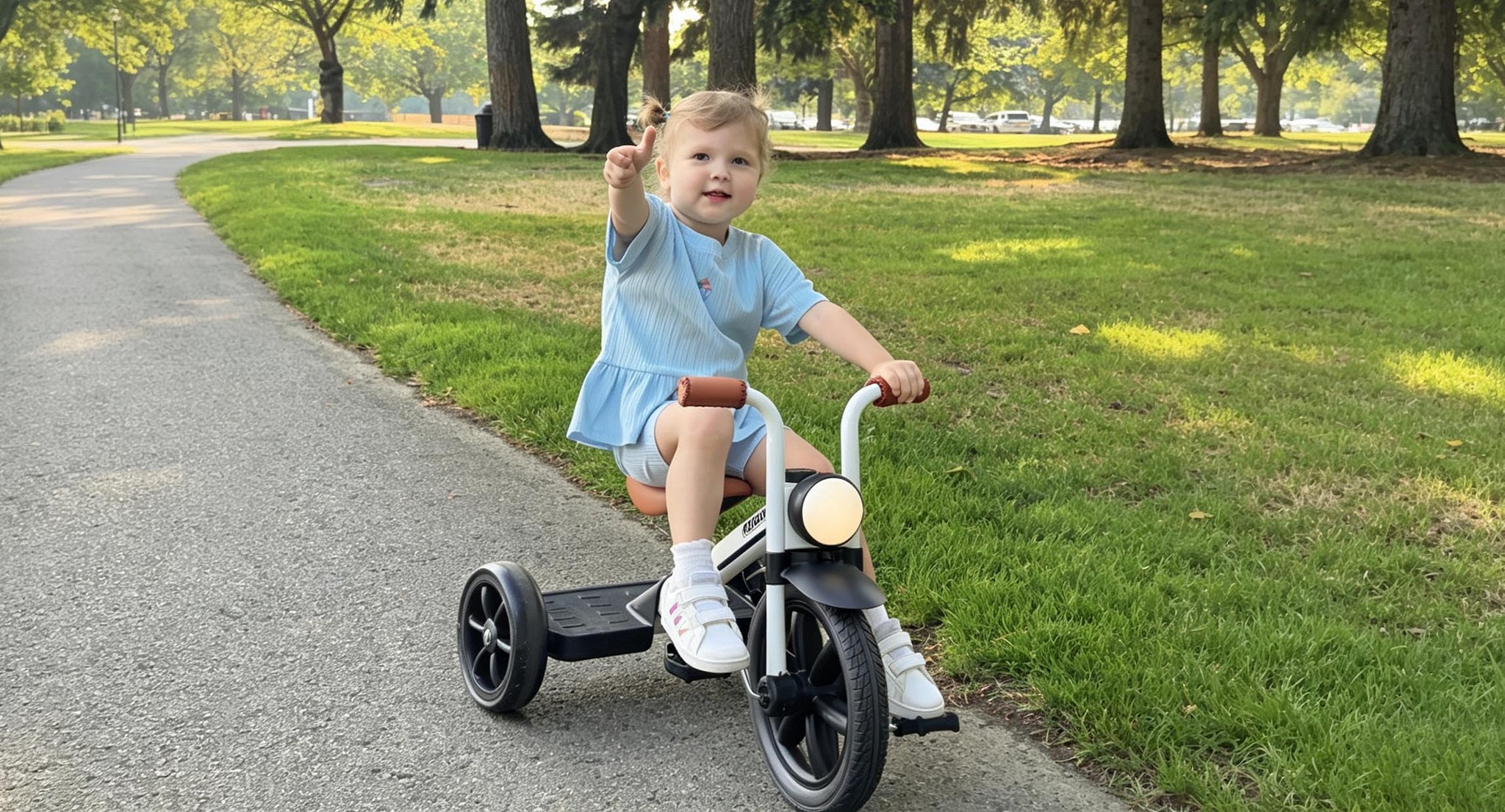
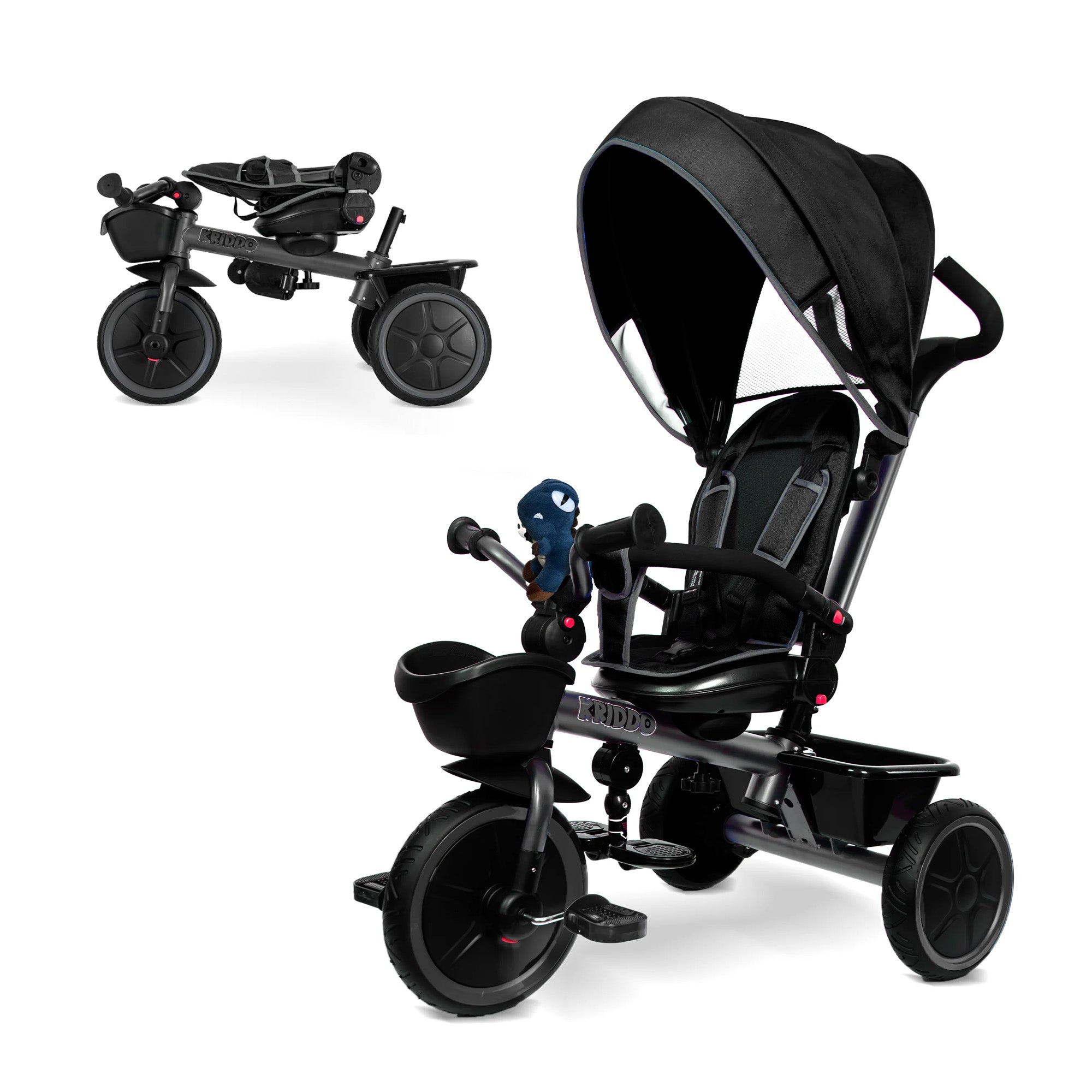
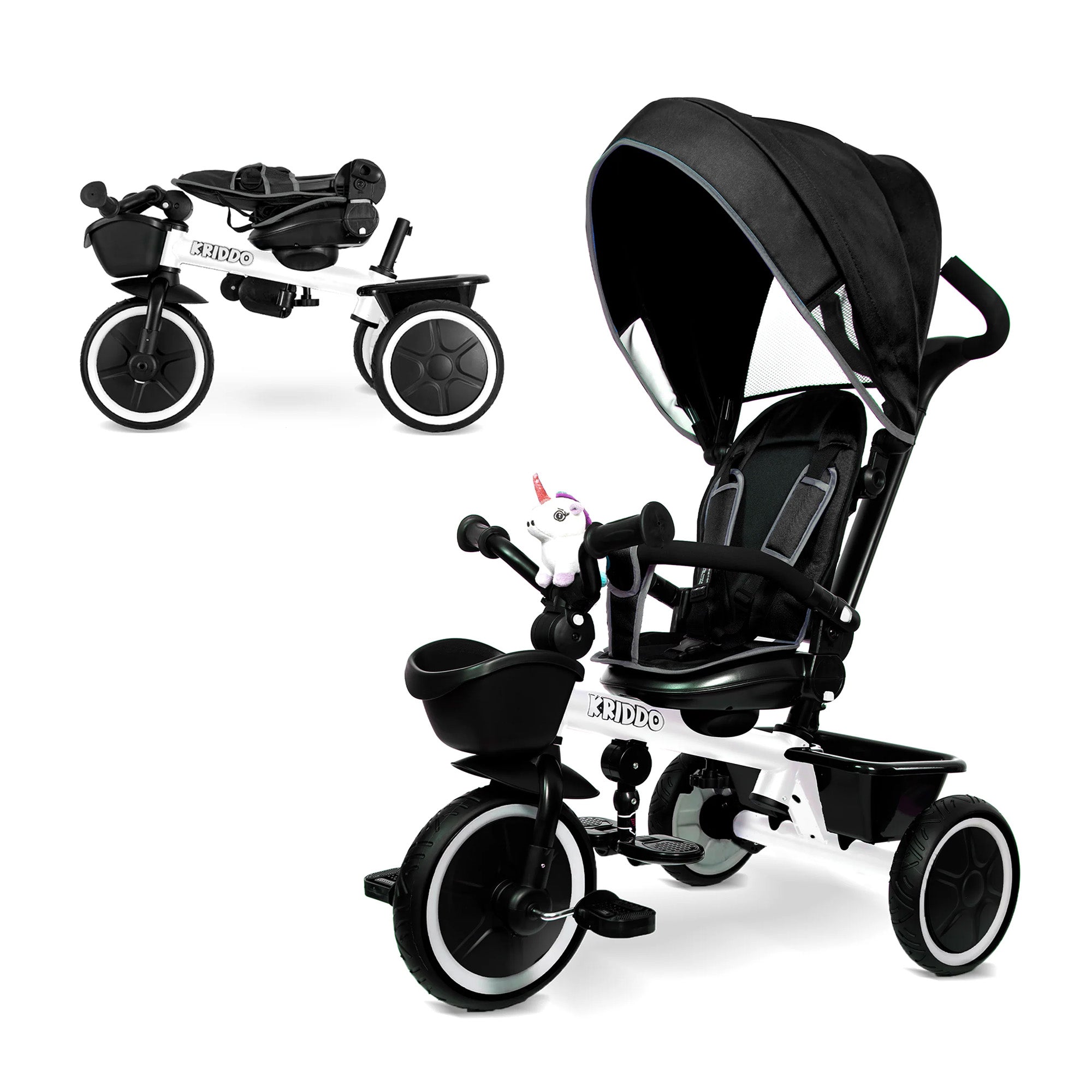
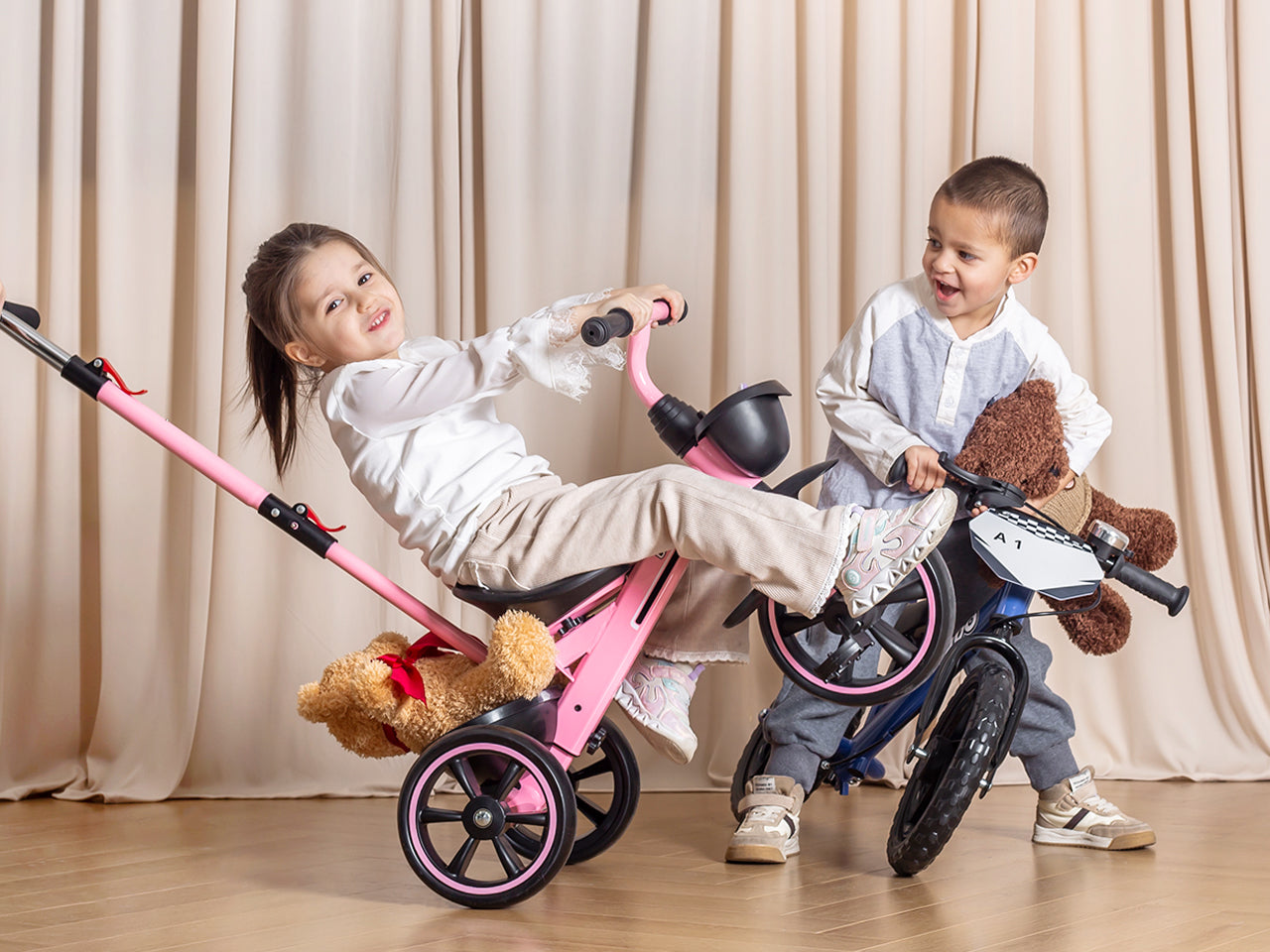
And if your child is a little older and starting to show an interest in riding, a stroller trike can be another option to consider. A multi-function push trike can combine pushing and riding as your child grows.
So, what should you look for in a baby stroller? Start with how you’ll use it, then work your way through safety, size, comfort, and the features you’ll actually appreciate on a busy Tuesday morning.
Start With Your Family’s Everyday Needs

Before comparing stroller models, think about your daily routine.
A stroller that works beautifully for one family might be completely wrong for another. There’s a big difference between pushing a baby around the neighborhood and carrying a stroller through airports, loading it into a small trunk, or taking it over rough terrain.
Your budget matters, too. Strollers can range from around $30 to well over $1,000, so it helps to decide what you’re comfortable spending before you get caught up in extra features.
In general, more expensive strollers may offer higher-quality materials or more features, but price alone doesn’t tell you whether a stroller is right for your family.
Ask yourself:
- Where will I use the stroller most often?
- Do I need something for uneven sidewalks or outdoor trails?
- Will I travel frequently?
- How important is a large storage basket?
- Do I need to carry the stroller up stairs?
- How easy does it need to be to fold and unfold?
- Will I use it for one child or potentially several children?
- Which matters more to me: lightweight design, storage, maneuverability, or longevity?
Those questions can narrow the field surprisingly quickly.
Think About Your Baby’s Age
One of the most important things to consider when deciding what to look for in a baby stroller is whether the stroller is appropriate for your child’s age, height, and weight.
Newborns have different needs from older babies. They cannot hold their heads up on their own, so they need a stroller that allows them to lie nearly flat or one that can be used with an appropriate bassinet or infant car seat.
If you’re buying a stroller before your baby is born, look for a model with a deep recline or bassinet option, or one that can accommodate an infant car seat or bassinet.
This is one area where choosing based purely on appearance can backfire. A stroller may look comfortable to an adult while still being unsuitable for a newborn.
Choose the Stroller Type That Fits Your Lifestyle
There isn’t one stroller type that works for everyone. Different designs solve different problems.
Standard or full-size stroller
Full-size strollers tend to be larger and more durable, with padded seats, storage space, and a canopy. They can often be used as your baby grows, making them a practical choice for everyday use.
The tradeoff is size. They generally take up more room and can be heavier to carry.
Lightweight or compact stroller
If portability is your priority, a lightweight stroller may make more sense. These models are typically around 7 kilograms or less, making them easier to carry, push, and fold.
They can be particularly useful for families who travel frequently or need to move the stroller in and out of a car often.
Jogging stroller
Jogging strollers are designed for active parents and typically have sturdy tires that provide a smoother ride over outdoor surfaces.
They can also be compatible with infant car seats, depending on the model. The downside is that they’re generally larger than lightweight or compact strollers.
Double stroller
Planning for twins or two young children? A double stroller can make daily outings much easier.
There are two basic layouts: tandem, where one child sits in front of the other, and side-by-side, where children sit next to each other.
Tandem models are often easier to maneuver and can be more stable and compact when folded. Side-by-side models give both children a similar view, but they can be wider.
If you choose a side-by-side stroller, check the footrest design carefully. A single continuous footrest is preferable to two separate footrests because separate footrests can create a space where a child’s foot could become trapped.
Travel system
A travel system combines a stroller with an infant car seat. For families with newborns, this can be convenient because the combination is ready to use without purchasing completely separate systems.
It can also make moving a sleeping baby from the car to the stroller easier.
Stroller trike
As children get older, a stroller trike can offer something different from a traditional stroller. It can give a child more involvement in the ride while still allowing a parent to push.
For families looking for a product that can support different stages of early riding, a tricycle stroller may be worth considering once the child is old enough and ready for that type of activity.
Pay Close Attention to the Harness
A stroller should keep your child securely positioned, particularly when the seat is reclined or the stroller is moving over uneven surfaces.
A five-point harness is considered the safest design in the source guidance. It includes shoulder straps, a strap between the legs, and connected waist straps.
When testing a stroller, make sure the harness is secure but also practical enough that you can fasten and release it without struggling every time.
That last part matters more than it sounds. A harness that is technically secure but frustrating to use can become a daily headache.
Check the Front Bar and Leg Openings
If the stroller has a front bar or grab bar, pay attention to the opening between the bar and the seat.
When the seat is reclined, the opening should close appropriately so the child cannot slide through.
The leg openings also shouldn’t be so large that a baby could slip through them. These details are easy to overlook when you’re focused on the stroller’s wheels, canopy, or storage basket, but they’re part of what makes a stroller appropriate for a young child.
Test the Brakes

Good brakes should securely lock the rear wheels using a mechanical mechanism rather than simply pressing against the tires.
Some strollers have a brake on one wheel, while others have brakes on two wheels. Either way, the system should be easy for you to engage and release.
Try the brake yourself before buying if possible. You don’t want to discover on your first outing that the pedal is awkward to reach or requires too much force.
Look at Stability Before Anything Else
A stroller should feel stable when your child is sitting inside it.
A wider wheelbase and a lower seat position can improve stability. One simple test is to gently press down on the handle. The stroller shouldn’t easily tip backward.
This is especially worth checking if you plan to hang anything from the handle. A heavy bag can change how the stroller behaves, so storage placement matters.
If there’s a basket underneath, it should sit low toward the back of the stroller and in front of the rear wheels. That position helps keep the weight lower rather than putting too much weight high on the handle.
Don’t Forget the Folding Mechanism
A stroller can look perfect on paper and still drive you crazy if folding it feels like solving a puzzle.
If you’ll regularly put the stroller in your car, test how easily it folds and unfolds. If possible, try doing it with one hand.
Think about where you’ll store it at home, too. A bulky stroller may work well in a large garage but become frustrating if it has to live in a small apartment hallway.
Weight matters for the same reason. If you’ll be lifting the stroller frequently, a few extra pounds can become noticeable surprisingly quickly.
Test the Steering and Handle Height
Good maneuverability can make a heavier stroller much easier to live with.
You should be able to push the stroller in a straight line with one hand. Try turning it around a corner and navigating a tighter space before making your decision.
Handle height matters as well. Ideally, the handle should sit around your waist or slightly below it.
You might not notice a small difference during a two-minute test in a store. After pushing a stroller for an hour, though, you probably will.
Look for Safety Hazards
Before buying, inspect the stroller from your child’s perspective.
There shouldn’t be parts that could pinch little fingers or create a choking hazard. Check hinges, folding joints, straps, buckles, and any small removable pieces.
Don’t just ask whether the stroller looks sturdy. Look at how all the moving parts work.
A stroller is something you’ll probably use repeatedly, sometimes while distracted, tired, carrying a diaper bag, or trying to get somewhere on time. The simpler and more intuitive the important safety features are, the better.
The Best Stroller Is the One That Fits Your Real Life

There’s a temptation to search for the stroller with every possible feature. But more features don’t automatically make a stroller better.
If you mostly walk around the neighborhood, you may care more about smooth steering, a comfortable seat, and storage than an elaborate folding system.
If you travel constantly, weight and portability may be your top priorities.
If you’re expecting another child, a convertible or double stroller may make more sense than buying a single stroller now and replacing it later.
And if your child is getting older and becoming interested in riding, a stroller trike may fit your family better than continuing to rely on a traditional stroller for every outing.
So, what to look for in a baby stroller really comes down to a handful of practical questions: Is it safe for your child? Can you comfortably use it? Does it fit your daily routine? And will it continue to make sense as your family changes?
Once you answer those questions, the enormous stroller aisle starts to feel a lot less overwhelming.