




Travel Stroller vs Regular Stroller:
Which One Fits Your Family?
Katherine | 28th, Sep
You’re standing in the airport with a toddler who suddenly wants to be carried, a diaper bag hanging from one shoulder, and a stroller that somehow feels twice as heavy as it did at home.
Sound familiar?
That’s usually when parents start wondering about the difference between a travel stroller vs regular stroller. One looks small and easy to carry. The other feels sturdy, comfortable, and ready for a full day out. So which one should you actually choose?
Honestly, there isn’t one answer for every family. The right stroller depends on where you go, how often you fold it, how much you carry, and what your child needs when you’re out.
If you’re comparing the different options available, it also helps to understand the differences between different stroller types and how they fit different parenting needs.
Travel stroller vs regular stroller: what’s the real difference?

The biggest difference between a travel stroller and a regular stroller comes down to portability versus everyday comfort.
Travel strollers are designed to be lightweight, compact, and easy to fold. They’re handy when you’re squeezing into a small car, walking through a busy airport, taking public transportation, or simply carrying the stroller up a flight of stairs.
Regular, full-size strollers usually have a larger frame, bigger wheels, more storage, and more suspension. They can feel much more comfortable on longer walks and uneven sidewalks.
Here’s a simple comparison:
| Feature | Travel Stroller | Regular Stroller |
|---|---|---|
| Weight | Lightweight, often around 13–18 lbs | Heavier, often 20–30+ lbs |
| Folded size | Very compact | Larger when folded |
| Storage | Smaller basket | Larger storage basket |
| Comfort | Basic padding and recline | More supportive seat and recline |
| Terrain | Best on smooth surfaces | Better for uneven ground |
| Portability | Easy to carry | Less convenient to transport |
Neither design is automatically better. They’re simply built around different parts of family life.
What makes a travel stroller so useful?
A travel stroller is basically the stroller you don’t mind taking everywhere.
You can fold it quickly before getting into a rideshare. You can tuck it into a smaller trunk. You can carry it through a hotel lobby without feeling like you’re hauling camping equipment.
That compact design can also make a surprising difference in everyday life.
In situations like these, a lightweight stroller can be incredibly practical.
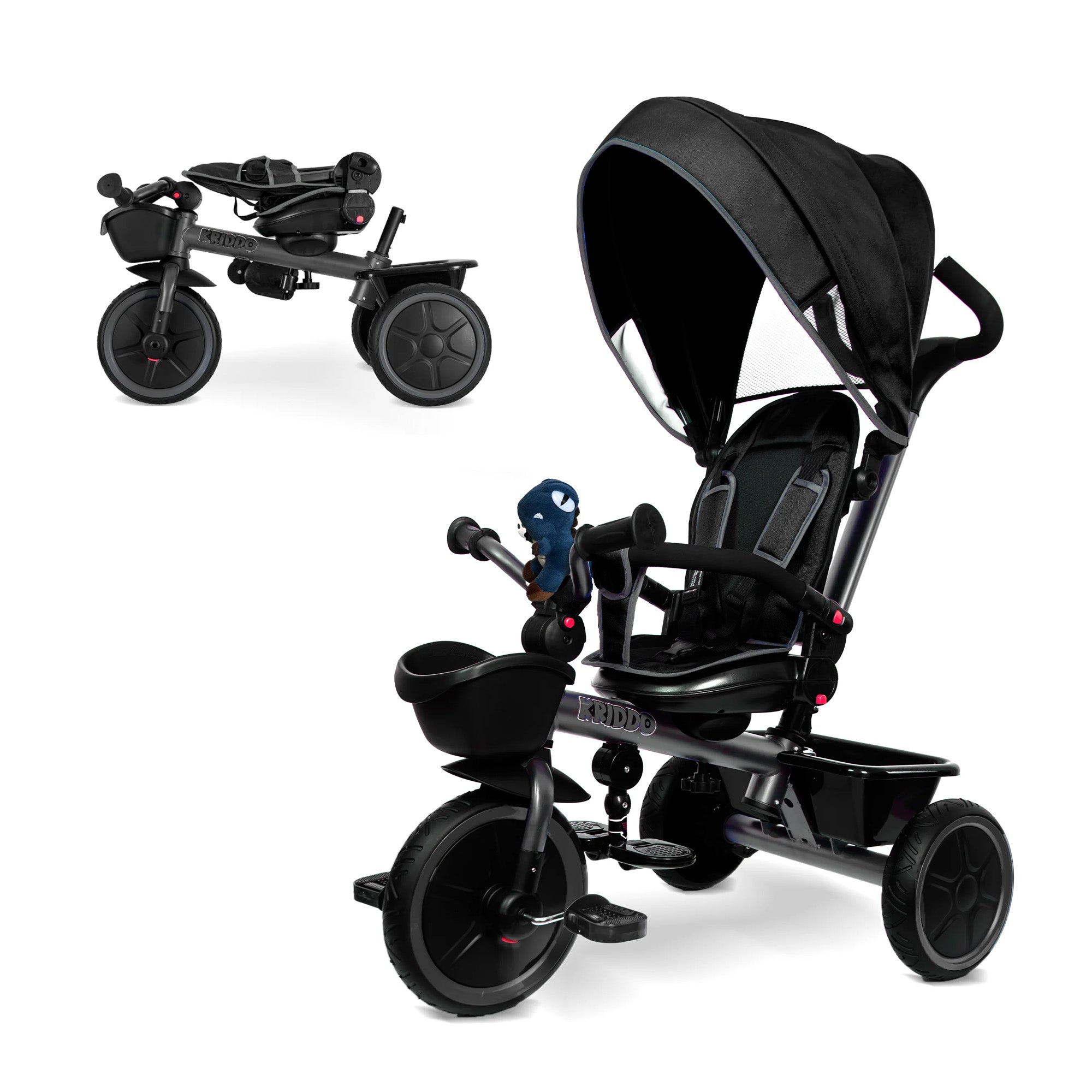
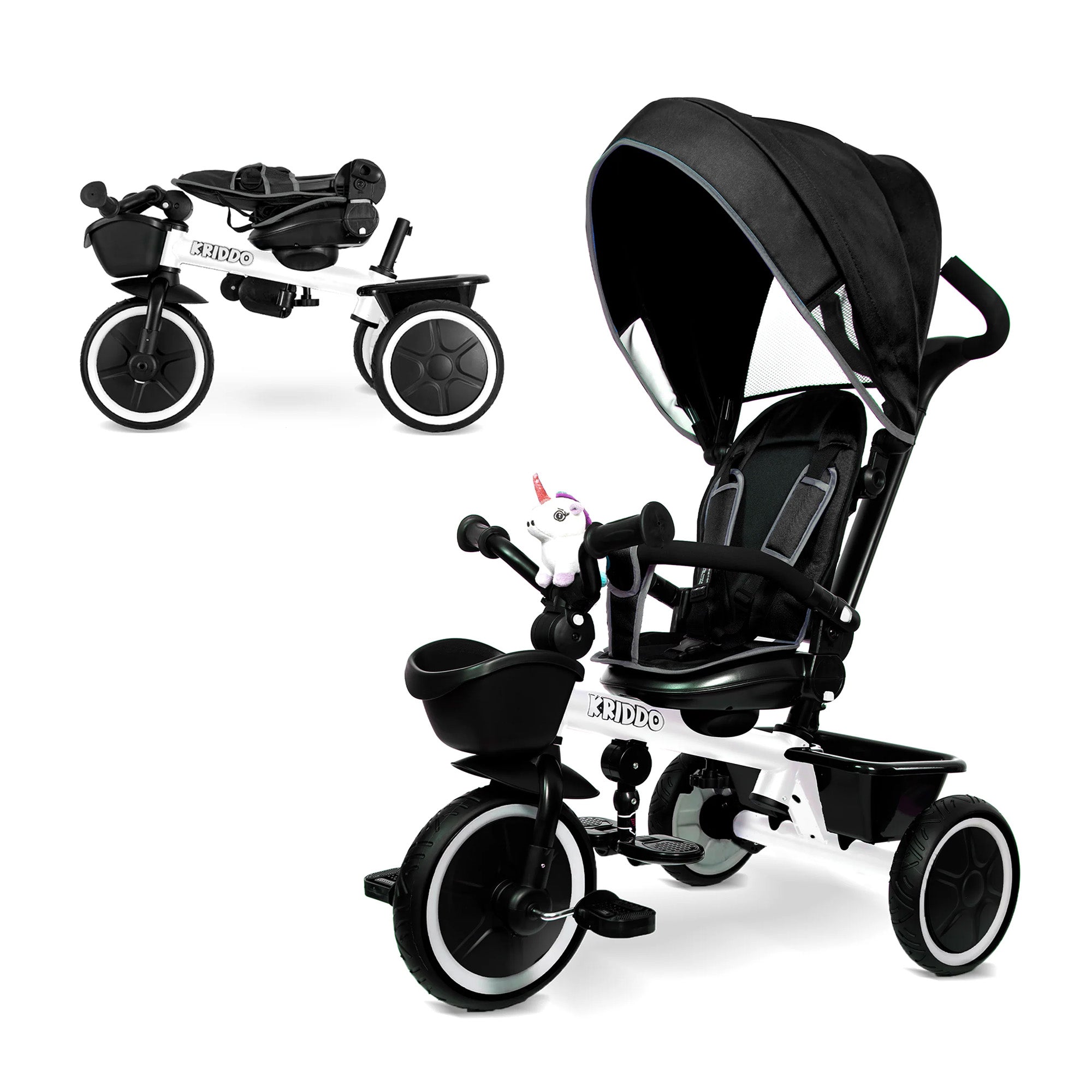
A compact option such as the KRIDDO lightweight baby stroller is designed around that kind of flexibility. Its seat adjusts from 110° to 170°, while the adjustable footrest gives little legs room to stretch out. The UPF 50+ canopy can also provide extra shade during sunny walks.
And there’s something else parents tend to appreciate: storage.
A travel stroller may be small, but that doesn’t mean you want to leave everything else at home. A larger shopping basket and parent bag can make quick errands much easier.
The trade-off with a travel stroller
The same compact frame that makes a travel stroller convenient can also limit it.
Many lightweight travel strollers are intended for babies who can sit independently, often around 6 months and older, because they may not offer the same newborn support or fully flat position as a full-size stroller. Always check the individual stroller’s age and weight requirements before use.
The smaller wheels and lighter suspension also mean that smooth sidewalks and indoor floors are usually easier than grass, gravel, cobblestones, or rough park paths.
So if your idea of a normal afternoon involves a paved neighborhood walk and a coffee shop, a travel stroller can make plenty of sense. If it involves hiking trails and uneven sidewalks, you may want something sturdier.
When does a regular stroller make more sense?
Now imagine a different Saturday.
You’re heading out for several hours. There’s a diaper bag, snacks, a water bottle, a blanket, a couple of toys, and probably a few things you didn’t plan on buying. Your child falls asleep halfway through the walk.
This is where a full-size stroller can really earn its space.
Regular strollers tend to have roomier seats, larger storage baskets, stronger frames, and better suspension. That extra structure can make long outings more comfortable for both the child and the parent pushing.
They can also be a practical choice when you’re buying your family’s main stroller from the beginning.
A full-size stroller may be worth considering if:
- You want a stroller for everyday use.
- You’re shopping for your first stroller before your baby arrives.
- You need newborn support or a bassinet option.
- You take frequent neighborhood walks.
- You regularly carry a diaper bag, snacks, toys, or shopping bags.
- You often travel across sidewalks, park paths, or uneven ground.
- You want a stroller that can adapt as your child grows.
The larger wheels and suspension can help absorb bumps and vibrations, which matters when your little one is trying to nap while you’re walking down a less-than-perfect sidewalk.
Many full-size designs can also work with infant car seats, bassinets, or toddler seats. That adaptability can be useful if you’d rather buy one main stroller and keep using it through several stages.
Think about how you actually leave the house

When comparing a travel stroller vs regular stroller, don’t just imagine a perfect vacation.
Think about a completely ordinary Tuesday.
How often do you fold the stroller? Is your car trunk small? Do you use elevators or public transportation? Do you walk several miles at a time? Are you constantly carrying groceries, toys, and snacks?
These little details matter more than they seem.
If you fold the stroller five times a day, saving a few pounds can feel like a huge improvement. If you rarely fold it and spend hours walking, a comfortable seat, larger wheels, and extra storage may matter much more.
Your budget is another practical consideration. Stroller prices can vary based on the frame, suspension, storage, and added features, so the price difference doesn’t necessarily mean one type is better.
What about families who travel often?
For frequent travelers, the travel stroller vs regular stroller question usually becomes a question of convenience.
A stroller that folds quickly and takes up little space can make airports, hotel rooms, rental cars, and public transportation much easier to manage. You’re already carrying enough. A bulky stroller can become one more thing to wrestle with.
But occasional travel doesn’t automatically mean you need a travel stroller.
If your family mostly stays close to home and only takes one big trip a year, your regular stroller may be perfectly fine. With a little planning, you can still travel with a full-size model.
Could you actually use both?
Absolutely.
Some families eventually realize that the travel stroller and regular stroller serve completely different purposes.
The regular stroller becomes the everyday workhorse. It stays in the trunk or by the front door, handles longer walks, carries the diaper bag, and gives your child a comfortable place to rest.
The travel stroller becomes the grab-and-go option. It’s the one you reach for when you’re heading to the airport, visiting a crowded place, or jumping into a small car.
At first, having two strollers might sound unnecessary. Then you’re trying to fit a stroller, luggage, groceries, and a sleeping toddler into one tiny trunk—and suddenly it makes sense.
So, travel stroller or regular stroller?

The simplest way to think about travel stroller vs regular stroller is to picture your most common day, not your ideal day.
Choose a travel stroller if portability, compact storage, and easy folding are your biggest priorities. It can be especially useful for travel, small living spaces, short outings, and children who already sit confidently.
Choose a regular stroller if comfort, storage, suspension, durability, and long-term everyday use matter more. It’s often the more practical setup for long walks, newborn stages, uneven surfaces, and families who carry plenty of gear.
And if your lifestyle changes as your child grows, your stroller needs may change too. There’s nothing strange about using one stroller now and choosing a different setup later.
Sometimes the best stroller is simply the one that makes getting out the door feel a little less complicated.